

This article suggests an AI-Driven Forecasting Architecture for Enterprise Solutions and Initiatives: Integrating Predictive, Prescriptive, and Cognitive Analytics in Enterprise Architecture.
Final Recommendations
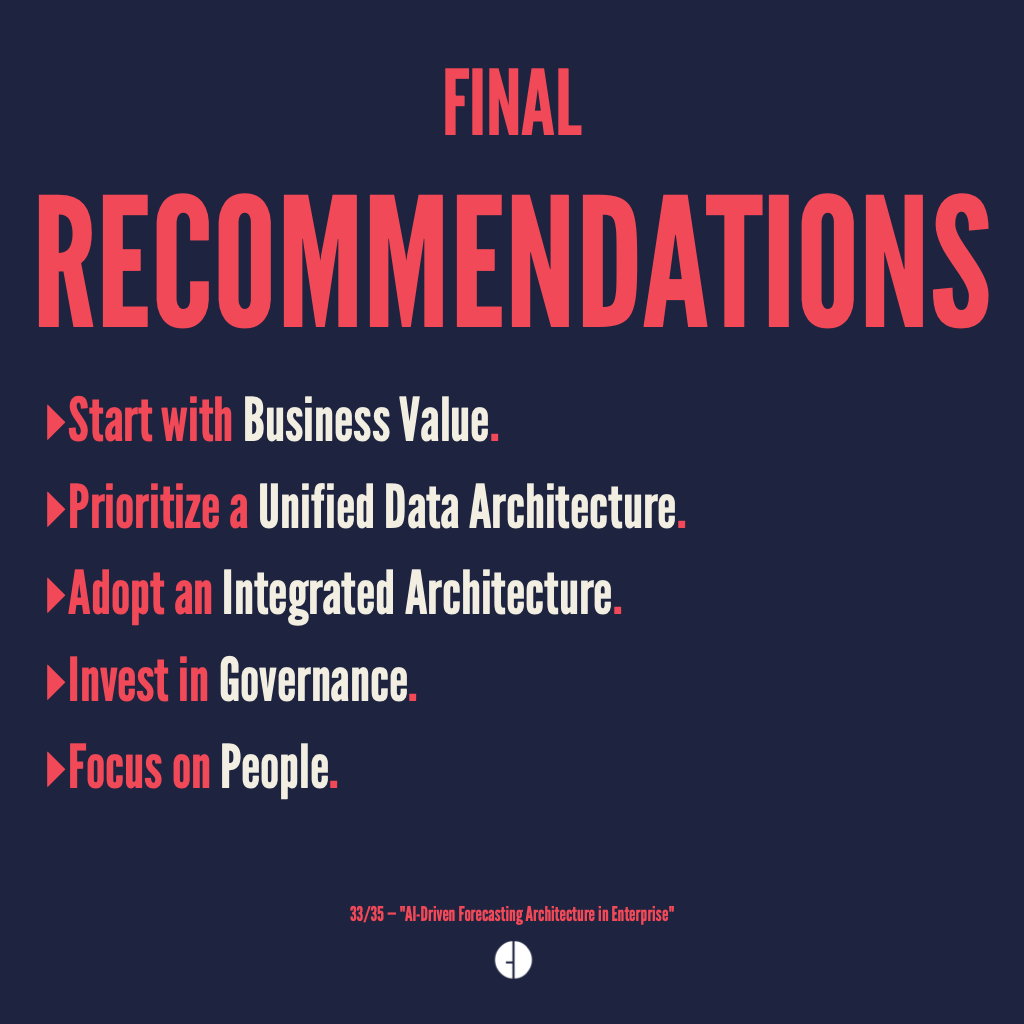
The successful realization of the AI-driven forecasting architecture requires a deliberate and strategic approach. The following recommendations are provided for senior leadership seeking to embark on this transformative journey.
- Start with Business Value, Not Technology: The primary motivation for investment should be a clear, high-impact business problem. Do not invest in AI for the sake of technology; instead, define a specific objective and a measurable ROI from the outset to ensure strategic alignment and secure buy-in.
- Prioritize a Unified Data Architecture: The evidence is conclusive: data is the non-negotiable foundation of all AI initiatives. Organizations must commit to eliminating data silos and investing in a modern, unified data architecture. This will ensure data quality and provide the single source of truth necessary to build accurate, enterprise-wide models.
- Adopt an Integrated Architecture, Not Isolated Projects: The highest value is unlocked by moving beyond a series of siloed analytics projects to an integrated architecture that connects predictive insights with prescriptive actions and cognitive reasoning. This holistic approach ensures that forecasts are not just understood but are acted upon autonomously and at scale.
- Invest in Governance as an Enabler: Establish a robust, dynamic governance framework from the outset. This is not a compliance exercise but a strategic investment that enables trust, scalability, and long-term viability. The framework must continuously monitor for model drift, mitigate bias, and ensure the privacy and security of sensitive data.
- Focus on People as the Critical Enabler: The most crucial factor for success is the human element. Invest in training and upskilling the workforce to make them AI-literate and to cultivate a culture of collaboration. The future of forecasting is not AI replacing human expertise but a symbiotic partnership where AI augments human capability, freeing talent to focus on creativity, judgment, and complex problem-solving to unlock unprecedented value and innovation.
Part 1: The Foundational Aspects of Modern Analytics
About Analytics Maturity Model
The evolution of business analytics can be conceptualized as a maturity model, a progression from understanding the past to anticipating and shaping the future. This journey defines the shift from merely being data-informed to becoming a truly data-driven and AI-augmented organization.
Descriptive and Diagnostic Analytics form the foundational base of this model. Descriptive analytics answers the fundamental question, “What happened?” by providing a clear summary of historical data. This category includes common business intelligence tools, dashboards, and reports that track key performance indicators (KPIs), trends, and operational benchmarks. It provides a historical snapshot, allowing an organization to measure and manage its current state. Building on this, diagnostic analytics delves deeper, addressing the question, “Why did it happen?” This involves a more profound analysis to uncover the root causes of specific events or patterns. By examining correlations between variables, a diagnostic approach can explain, for instance, why a particular machine’s downtime was higher than average in a given month or what factors contributed to a decline in sales.
Predictive Analytics represents the first major leap toward foresight, answering the question, “What will happen?” This capability involves using historical data, statistical models, and machine learning algorithms to forecast future outcomes with a high degree of accuracy. The process is a multi-step journey that transforms raw data into actionable insights. It begins with meticulous data collection and preparation, where data from various sources such as customer interactions, sales reports, and social media engagement is cleaned, organized, and engineered to select the most relevant variables. Predictive models are then trained to identify trends and patterns in this data, enabling them to anticipate future events. Common applications include sales and demand forecasting, customer churn prediction, and identifying potential cyber threats before they occur.
Prescriptive Analytics elevates the architecture from prediction to action. It answers the critical question, “What should we do?” by taking predictive insights and recommending the optimal course of action to achieve a specific goal. This capability often relies on a combination of optimization algorithms, simulation models, and AI-driven decision models. For example, a prescriptive system can take a demand forecast and suggest the best inventory levels, resource allocation, or even dynamic pricing adjustments to maximize revenue. A logistics company might use it to dynamically reroute shipments based on real-time weather and traffic conditions to ensure timely deliveries and reduce costs. Prescriptive analytics is the catalyst that translates data-driven insights into tangible, automated strategies.
Cognitive Analytics represents the pinnacle of the maturity model, embodying the intelligence of the entire architecture. It mimics human cognitive functions such as learning, reasoning, and problem-solving, going beyond rule-based systems to handle both structured and unstructured data. It answers the question, “How do we think and reason?” and enables AI systems to understand context, sentiments, and intent from sources like text, images, and speech. Cognitive systems can process massive volumes of disparate information to uncover deep, meaningful insights that would be impossible for humans to detect manually. This capability augments human expertise, automates complex tasks, and enables autonomous decision-making. Examples include chatbots that can reason about a customer’s query, risk management systems that analyze transactions and sentiments, and medical systems that recommend personalized treatment plans based on a vast corpus of medical literature.
🌟 A Shift from Hindsight to Foresight
The progression through these stages is not a one-time event but a continuous journey of analytical maturation, transforming an organization’s relationship with data and decision-making.
Table: The Analytics Maturity Spectrum
| Type of Analytics | Question Answered | Primary Function | Example Use Case |
|---|---|---|---|
| Descriptive | What happened? | Summarizes historical data to provide a view of the past. | Quarterly sales reports, tracking website traffic, BI dashboards. |
| Diagnostic | Why did it happen? | Uncovers the root causes and contributing factors behind historical events. | Analyzing why a sales campaign underperformed or identifying the cause of a machine failure. |
| Predictive | What will happen? | Forecasts future outcomes and trends based on historical data patterns. | Demand forecasting, customer churn prediction, fraud detection. |
| Prescriptive | What should we do? | Recommends the optimal course of action to achieve a desired outcome. | Dynamic pricing, supply chain route optimization, resource allocation. |
| Cognitive | How do we think and reason? | Mimics human thought to interpret unstructured data and automate complex decisions. | Personalized customer experiences, intelligent chatbots, risk management systems. |
From a Continuum to an Integrated Architecture
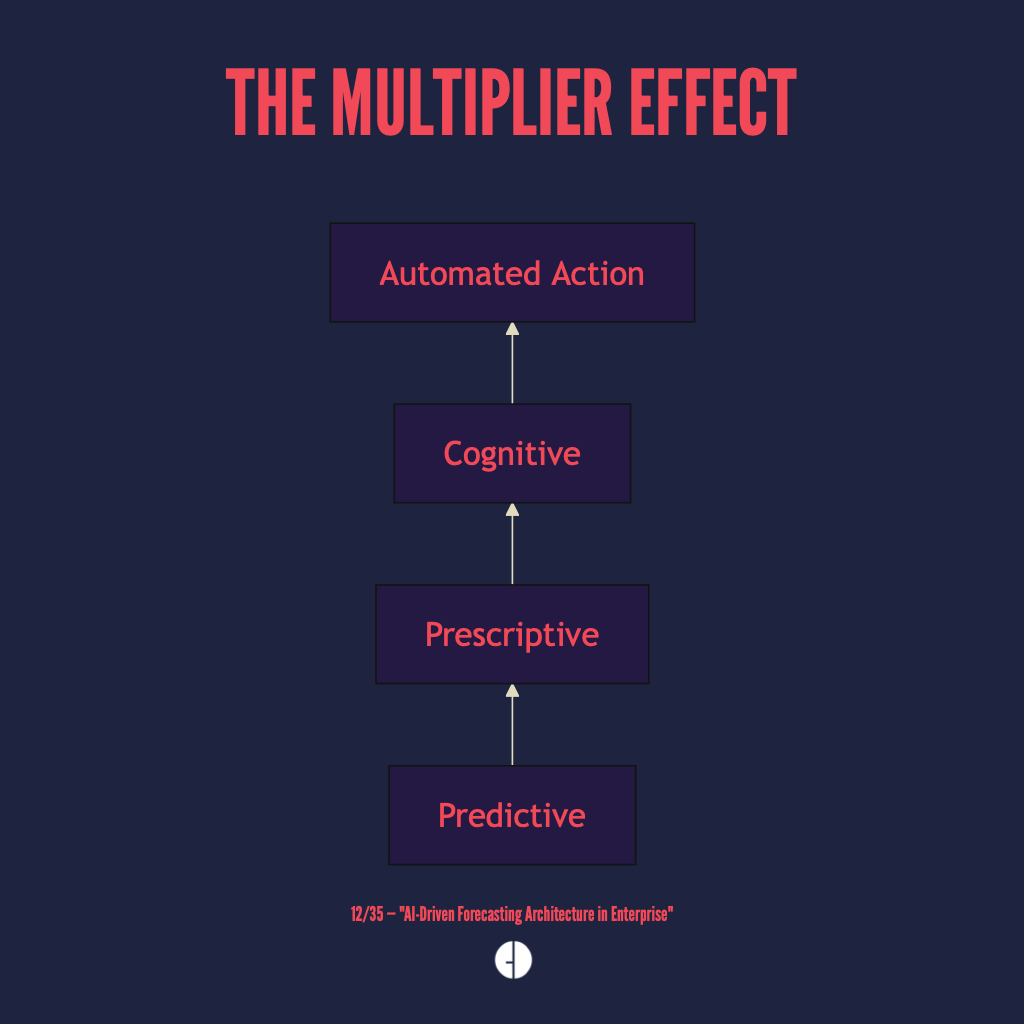
The true transformative potential of modern analytics does not lie in mastering a single stage but in seamlessly integrating all of them into a cohesive, orchestrated architecture. The analytics maturity model is not a linear set of isolated capabilities but a tightly connected continuum.
- Descriptive and diagnostic analytics provide the historical foundation and validated data necessary to build predictive models.
- Predictive models, in turn, produce the forecasts that feed directly into prescriptive systems, which then generate actionable recommendations.
- Finally, cognitive analytics provides a layer of human-like intelligence and reasoning to the entire process, allowing for the interpretation of unstructured data and the automation of complex, context-dependent decisions.
The relationship between these stages creates a powerful multiplier effect. A standalone predictive model that forecasts a surge in demand is valuable but limited in its utility if it requires a manual, time-consuming process for a human to then make decisions about inventory, staffing, and pricing. The value is compounded when that predictive insight is automatically fed into a prescriptive system that autonomously generates and executes the optimal reordering, rerouting, and dynamic pricing strategies.
🌟 For instance,
A logistics company’s AI-powered route optimization system can achieve significant cost reductions by continuously connecting predictive forecasts of traffic and weather with prescriptive actions for efficient routing. This integration is the key that transforms a mere tool into a strategic engine, providing both foresight and the means to act on it in near real-time.
The AI-driven forecasting architecture represents a paradigm shift in enterprise decision-making, moving from a human-centric model that is merely informed by data to an AI-augmented one. In the past, data was used to create reports that informed a human’s judgment. With predictive and prescriptive analytics, organizations become more data-driven, automating certain decisions based on forecasts and recommended actions. The introduction of cognitive analytics advances this further, as systems learn and adapt to make real-time decisions with minimal human intervention. This empowers organizations to reallocate their human talent from repetitive, low-value work to higher-level creative and strategic initiatives. For example, the automation of data entry and financial analysis frees up finance professionals to act as strategic partners, focusing on risk monitoring and capital allocation. This transition from data as a supporting function to a core, transformative capability is what fundamentally reshapes an organization’s competitive posture.
Part 2: The Enterprise Architectural Blueprint for AI-Driven Forecasting
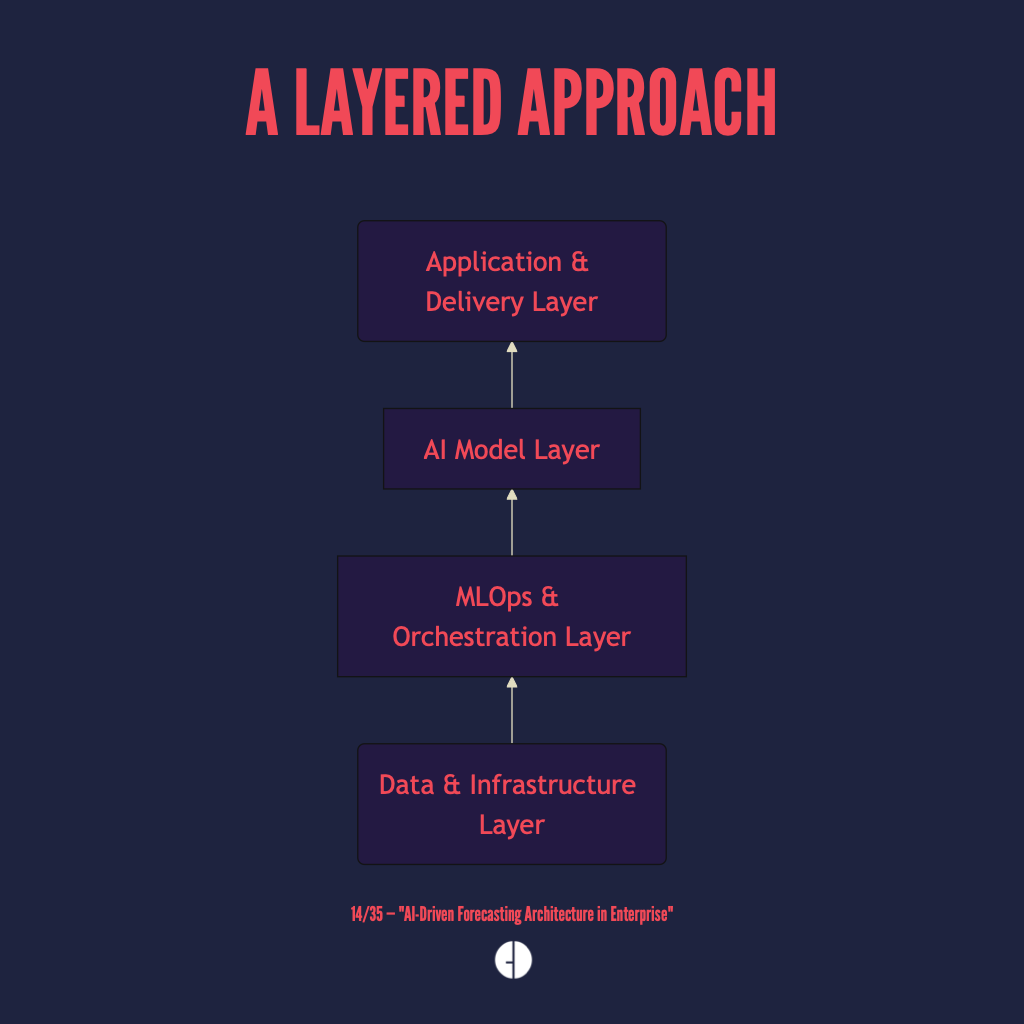
This blueprint is comprised of distinct yet deeply interconnected layers, each with specific functions.
The Data & Infrastructure Layer
This layer is the non-negotiable foundation of the entire architecture. Without a robust data infrastructure, no advanced analytics or AI can function effectively.
Data Ingestion and Storage: The architecture must be capable of ingesting and storing massive volumes of diverse data, including structured data from CRM and ERP systems, and unstructured data from social media, customer service logs, and IoT devices. The system must be scalable and fault-tolerant to handle both real-time streaming data and large-scale batch data. The data lakehouse architecture has emerged as the modern standard for this, as it unifies data warehousing and advanced analytics capabilities, providing a single environment for all data types.
Processing and Transformation: Raw, messy data must be cleaned, enriched, and transformed into a usable format for analysis. This involves a variety of processes, from automated data cleansing to feature engineering, which selects the most relevant variables to improve model accuracy. Tools like Apache Spark are critical at this stage for executing large-scale batch and real-time data processing jobs.
The MLOps & Orchestration Layer
This layer serves as the operational engine that bridges the gap between data science experimentation and the delivery of production-ready business value. The MLOps architecture provides a rigorous framework for managing the entire machine learning lifecycle, ensuring models are not just built but are continuously improved and maintained.
End-to-End Pipeline: A robust MLOps pipeline automates the entire AI workflow, from data ingestion to model deployment and monitoring. Key components include data orchestration tools that manage data flow, experiment tracking systems for logging model tests, and a model registry for storing and versioning trained models.
Continuous Improvement: This layer enables continuous integration/continuous deployment (CI/CD) processes for machine learning systems, allowing for automated retraining and model updates to prevent degradation and ensure sustained performance. Without this automation, models become static, their performance declines over time, and they fail to deliver sustained value.
Table: Core Components of an MLOps Pipeline
| Stage of MLOps Pipeline | Core Functions | Example Tools/Technologies |
|---|---|---|
| Data Ingestion & Preparation | Data collection, cleansing, normalization, and feature engineering. | Apache Airflow, ETL tools, data warehouses. |
| Model Training & Testing | Splitting data, training models, tracking experiments, and evaluating performance. | MLflow, TensorFlow, PyTorch. |
| Model Deployment | Containerizing models, exposing them as APIs, and integrating them into applications. | Docker, Kubernetes, Flask, FastAPI. |
| Monitoring & Feedback | Tracking model performance, detecting drift and anomalies, and providing feedback for retraining. | Prometheus, Grafana. |
The Application & Delivery Layer
This layer is focused on securely exposing the intelligence to its consumers, whether they are human analysts or other automated systems.
API-Driven Delivery: Insights, forecasts, and prescriptive recommendations are not just confined to dashboards. They are delivered at scale via well-defined APIs and microservices, enabling seamless integration into existing business applications, from a CRM to a supply chain management system.
Interface and Accessibility: The delivery layer also includes user-friendly interfaces, such as self-service BI dashboards and visualization tools, that democratize access to data and insights. This empowers a wide range of users, from business analysts to citizen developers, to leverage the architecture’s power for informed decision-making without requiring deep technical expertise.
The AI Model Layer
This layer is the core intelligence of the architecture, comprising the algorithms and models that generate insights and predictions. The architecture must be model-agnostic and flexible enough to support a variety of approaches.
Model Selection: The architecture must support a diverse range of models, from traditional machine learning algorithms like linear regression and Random Forest, which are effective for structured data, to deep learning models for complex, unstructured datasets. Reinforcement learning also shows promise for optimizing complex, dynamic systems like inventory management and supply chain logistics.
Automated Model Development: For organizations to scale their AI initiatives, the model development process cannot be a manual, labor-intensive effort. AutoML platforms are essential for automating time-consuming tasks like model selection and hyperparameter tuning, significantly reducing the time required to produce production-ready models.
🌟 Important
The shift from a fragmented, siloed data infrastructure to a unified, layered architecture is a foundational prerequisite for achieving AI-driven forecasting at scale.
Data silos is major impediment, with critical information scattered across disconnected systems like CRM, ERP, and marketing platforms. Such fragmentation makes it impossible for an AI model to form a complete picture, leading to limited, department-specific predictions rather than a single source of enterprise-wide foresight.
Part 3: Strategic Integration and Implementation Roadmap
The Role of the Enterprise Architect in the AI Transformation Journey
The successful implementation of an AI-driven forecasting is not a purely technical endeavor; it is a strategic business transformation that requires a new way of thinking. Traditionally, enterprise architecture (EA) has been a manual and static practice, with reviews and updates occurring on a cyclical basis. The advent of AI introduces a new paradigm of dynamic EA, where continuous monitoring and analysis allow systems to adjust in near real-time.
ℹ️ Read more
I have written about Enterprise Architecture’s New Model in AI era here.
The enterprise architect is positioned to be a key driver of this transformation. Their role is to ensure that AI capabilities are not treated as isolated tools but are integrated intelligently into the broader enterprise landscape. This involves a forward-looking perspective, where they must assess existing systems, identify gaps, and align new AI initiatives with overarching strategic goals. They act as a bridge between high-level business strategy and low-level technical implementation, providing a visual blueprint of the organization and showing the key relationships between data, processes, applications, and strategies. The architect’s responsibility includes modeling future changes and identifying data gaps, which are crucial for prioritizing data collection efforts and building a robust data foundation for AI. By standardizing data governance policies and promoting a unified data environment, they ensure the quality and consistency of data across the organization, which is essential for a scalable forecasting architecture.
Phased Implementation: From Pilot to Production
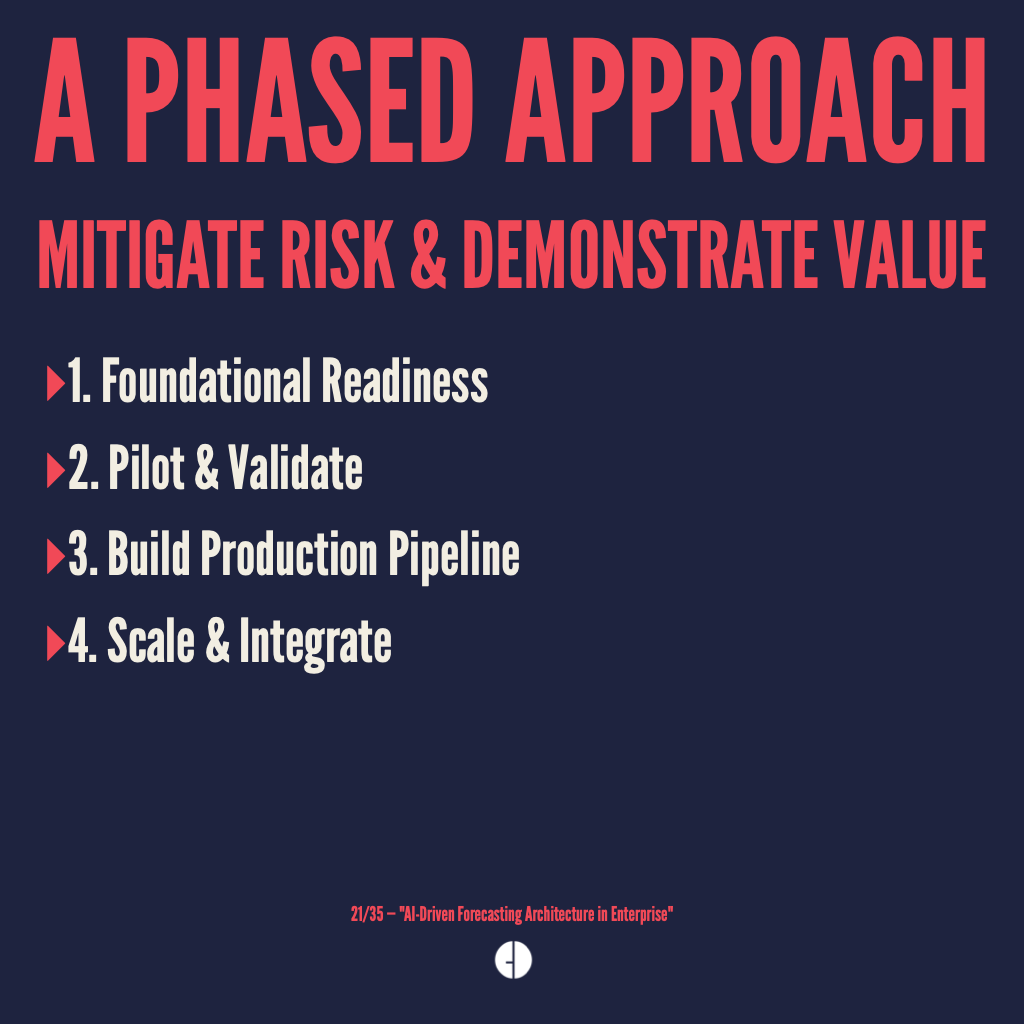
A phased approach is recommended for implementing the AI-driven forecasting architecture to mitigate risk and demonstrate value early on.
Step 1: Foundational Readiness: Before any technology adoption, an organization must conduct a thorough self-assessment. This involves evaluating current forecasting methods (e.g., are spreadsheets and basic statistical tools still the primary approach?), assessing the state of the data infrastructure (is data fragmented across silos?), and understanding the capabilities of the internal teams. Concurrently, a clear governance charter must be established. This charter should define responsibilities, address AI-specific risks, and ensure a culture of responsible AI from the outset.
Step 2: Develop and Validate a Pilot: The journey should begin with a single, well-defined business problem that has a clear objective and a high probability of demonstrating tangible value. This pilot phase focuses on data integration and model building in a controlled environment. The goal is to achieve “rapid wins” and prove the concept by building a model that can provide an early, measurable ROI, such as a reduction in cart abandonment or a decrease in unsold inventory. This initial success is crucial for securing executive sponsorship and building momentum for future investments.
Step 3: Build the Production-Ready Pipeline: This is the critical leap from a one-off model to a scalable, enterprise-grade system. The focus shifts to engineering a formal MLOps pipeline that automates the end-to-end process. This involves defining and scripting the logic for data preprocessing, model training, and deployment, so the entire workflow can be executed and managed by an orchestration framework. The pipeline must be designed with continuous improvement in mind, ensuring models are automatically monitored and retrained to adapt to changing conditions and prevent performance degradation.
Step 4: Scale and Integrate: Once the production pipeline is validated, the framework can be expanded to more complex and high-impact use cases across the enterprise. This involves integrating the framework with existing systems via APIs, standardizing data models and tools, and redesigning human-AI teamwork. The ultimate goal is to move beyond departmental silos to a single, unified enterprise solution that delivers consistent, high-quality insights across the organization.
The successful implementation of an AI-driven forecasting architecture is not solely a matter of technology; it is highly dependent on the organizational readiness, cultural shift, and strategic alignment that accompany it.
🌟 Important
Successful implementations require strong executive sponsorship and clear business goals tied to specific use cases.
A major challenge is a potential resistance from employees who fear automation. This challenge can be overcome by reframing AI not as a replacement for human jobs but as an augmenter of human capability, handling repetitive tasks and allowing employees to focus on higher-value work. Organizations that invest in a culture of collaboration and provide training on AI literacy are more likely to achieve successful outcomes. This comprehensive approach to change management is a non-negotiable component of a successful AI transformation.
ℹ️ Read my previous article
about a sense of Technological Fatalism or Apocalyptic Apathy, where AI is seen as an unstoppable, job-displacing force: “AI Colleagues: The New Org Chart”
Part 4: Governance, Ethics, and Risk Management
AI Governance as a Business Enabler
The rapid adoption of AI without proper governance is one of the most significant risks an organization can undertake. Governance is not a bureaucratic afterthought but a mission-critical enabler of trustworthy, scalable, and future-ready AI. It provides a structured framework for assessing, planning, and implementing AI strategies effectively, ensuring they align with broader business objectives and ethical standards.
ℹ️ Read more
about Governance and Security Framework for MCP in my article Model Context Protocol (MCP): Bridging LLMs to Enterprise Data.
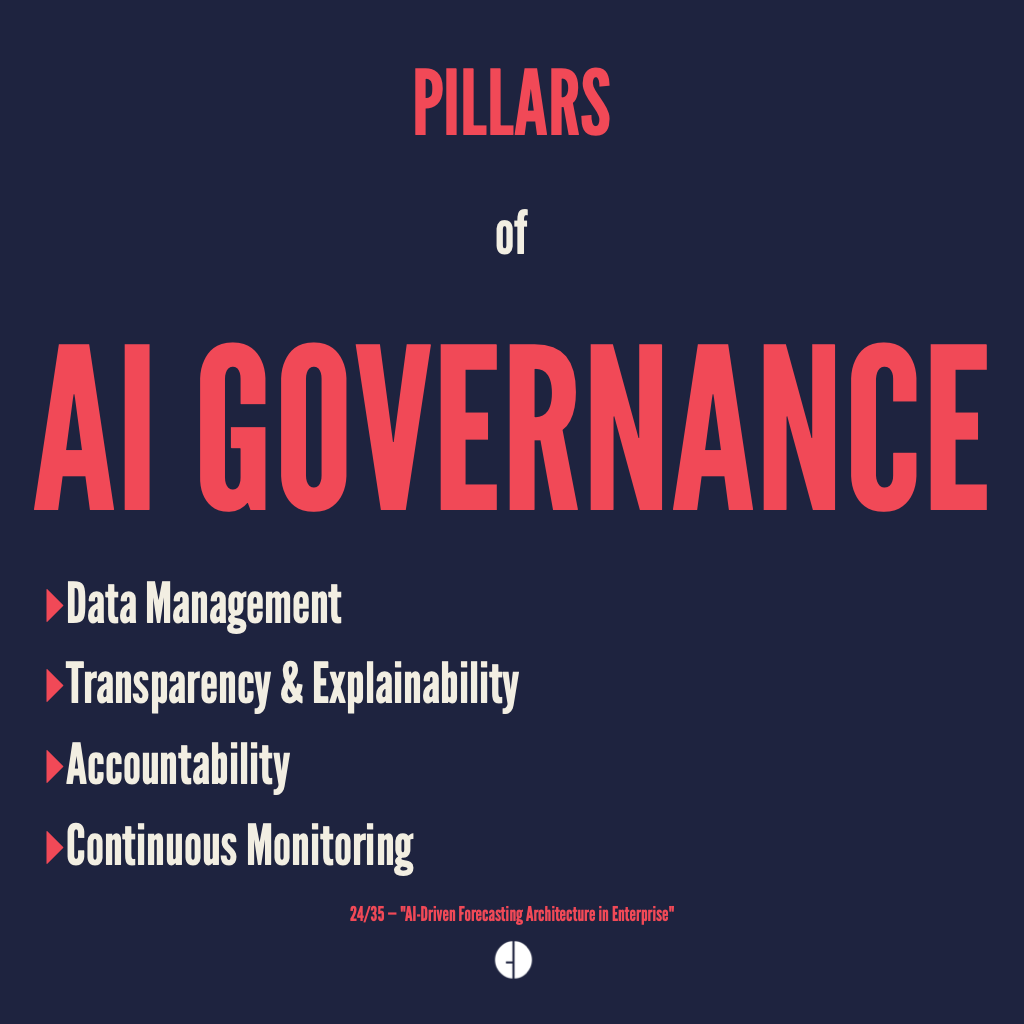
A robust AI governance framework is built upon several core pillars that collectively ensure the integrity and reliability of the AI-driven forecasting architecture:
Data Management: This pillar ensures the data used to train and fine-tune AI models is accurate, high-quality, and compliant with privacy and regulatory requirements. Inaccurate or incomplete data can lead to flawed predictions and costly mistakes, so establishing clear data quality frameworks and governance policies is essential from the outset.
Transparency and Explainability: The architecture must provide mechanisms for AI models to explain their decisions, especially in highly regulated sectors such as healthcare, finance, and legal systems. This is crucial for building trust among users and stakeholders and for adhering to regulatory standards.
Accountability: Clear roles and responsibilities must be defined for the entire AI lifecycle, from data collection and model development to deployment and monitoring. This includes establishing a governance board or committee to oversee AI initiatives and ensure compliance with established guidelines.
Continuous Monitoring and Auditing: Deployed AI models must be continuously monitored for performance, accuracy, and ethical adherence. Regular audits should be conducted to assess algorithm performance and ensure compliance with regulations and internal policies.
The convergence of AI, big data, and a tightening regulatory landscape means that data governance is rapidly evolving from a reactive IT function into a proactive, core business capability. Traditionally, data governance primarily addressed structured data for business intelligence. However, AI data governance must handle a broader variety of data types, including unstructured text, real-time streams, and third-party datasets. The increasing scrutiny from global regulatory bodies, such as the EU AI Act, demands a dynamic, iterative approach to governance that can adapt as risks and regulations evolve. A one-time governance setup is insufficient; instead, an organization must cultivate a living framework that is continuously refined through audits, incident reports, and regulatory updates to maintain trust and stay ahead of compliance requirements.
Table: Core Pillars of AI Governance
| Governance Pillar | Key Practices/Controls | Importance |
|---|---|---|
| Data Quality & Management | Data cleansing, lineage tracking, and establishing clear data ownership. | Ensures accurate, reliable data, preventing flawed predictions and costly mistakes. |
| Transparency & Explainability | Publicly documenting model development and providing explanations for AI-driven decisions. | Fosters trust among users and regulators, especially in sensitive sectors like finance and healthcare. |
| Accountability & Oversight | Forming a governance board and defining roles for legal, compliance, and data science teams. | Establishes clear responsibility, mitigates risk, and ensures ethical adherence across the lifecycle. |
| Continuous Monitoring & Auditing | Real-time tracking of model performance, bias, and compliance with ethical standards. | Proactively detects model degradation and security vulnerabilities to ensure sustained performance. |
| Data Privacy & Security | Data encryption, anonymization, and strict, role-based access controls. | Protects sensitive data from breaches and ensures compliance with privacy regulations. |
Mitigating Bias and Ensuring Fairness
Algorithmic bias is a critical risk in AI-driven systems. If left unchecked, AI models can perpetuate and even amplify existing biases embedded in their training data, leading to discriminatory outcomes and significant reputational and legal risks.
ℹ️ Have a look at my reflection
Understanding the Problem: Bias can be a result of skewed training data, flawed model assumptions, or societal inequities. The report distinguishes between statistical bias, which arises from incomplete or unrepresentative data, and discriminatory bias, where an AI system produces systematically different outcomes for different demographic groups, regardless of their actual characteristics. A particularly subtle form of this is “measurement bias,” where an algorithm avoids using a protected attribute (e.g., race) but instead uses a proxy feature (e.g., healthcare cost) that is highly correlated with it. This can result in unfair outcomes, as demonstrated by an algorithm that incorrectly flagged fewer Black patients for additional care because less money was historically spent on their healthcare.
Mitigation Strategies: Addressing bias requires a multi-pronged approach. Organizations should use diverse and representative datasets to minimize bias. This must be accompanied by rigorous testing and validation to identify and address biased outcomes before deployment. Best practices include implementing fairness-aware machine learning models and conducting continuous audits of AI-driven insights to ensure equitable outcomes. A human-in-the-loop approach is also recommended, where human oversight is maintained to validate AI quality and performance outputs.
ℹ️ About ‘human-in-the-loop’ in my previous articles:
AI Colleagues: The New Org Chart
Agentic AI Time: Orchestrating Autonomous Intelligence for Strategic Advantage
How DORA Shapes Your Enterprise AI Strategy
Model Context Protocol (MCP): Bridging LLMs to Enterprise Data
Part III: Governance, Security, and AgentOps in Enterprise Agentic AI
Managing Model Drift and Data Integrity
Even a well-trained, unbiased AI model can degrade over time and produce flawed results when deployed in a dynamic, real-world environment. This phenomenon, known as “model drift,” occurs when the production data diverges from the data on which the model was originally trained.
Types of Drift: three types of drift can be distinguished: Concept drift, where the relationship between input variables and the target variable changes (e.g., a shift in seasonal buying behavior); Sudden drift, caused by an unexpected, singular event (e.g., a pandemic or a new product launch); and Gradual drift, which occurs slowly over time as patterns evolve (e.g., spammers continuously adapting their tactics).
Mitigation Strategies: The primary solution to model drift is continuous monitoring. Organizations should use AI drift detectors and monitoring tools to automatically alert teams when a model’s accuracy decreases below a preset threshold. Once drift is detected, the solution is often to retrain the model with a new, more recent dataset to restore its predictive power. A best practice is to manage all models from a central dashboard to provide a holistic view of data lineage and track metrics throughout the entire lifecycle.
Data Privacy and Security
The vast amounts of personal and sensitive data required to train modern AI models present unique privacy and security risks. It is imperative that organizations protect this data to prevent unauthorized access and breaches that can compromise model integrity, lead to inaccurate decisions, and result in severe privacy violations.
Key Challenges: One of the most significant threats is a “Membership Inference Attack” (MIA), where an adversary attempts to determine whether a specific data point was part of a model’s training dataset. The risks are particularly high when models are trained on sensitive information such as medical records or financial transactions.
Best Practices: A multi-pronged security strategy is essential. It should include: Data Encryption (at rest and in transit) to safeguard sensitive information; strict Access Controls and Multi-Factor Authentication to ensure that individuals only have the necessary permissions for their roles; and Data Anonymization or Pseudonymization to protect individual privacy by replacing personal identifiers with artificial ones. Continuous data audits and monitoring act as an early warning system for potential security threats and vulnerabilities.
Part 5: Quantified Business Impact
The ultimate justification for investing in a comprehensive AI-driven forecasting architecture is its ability to deliver tangible, measurable business value. This section moves beyond conceptual understanding to provide a methodology for quantifying ROI and presents evidence-based results from various industries.
A Measurement Methodology
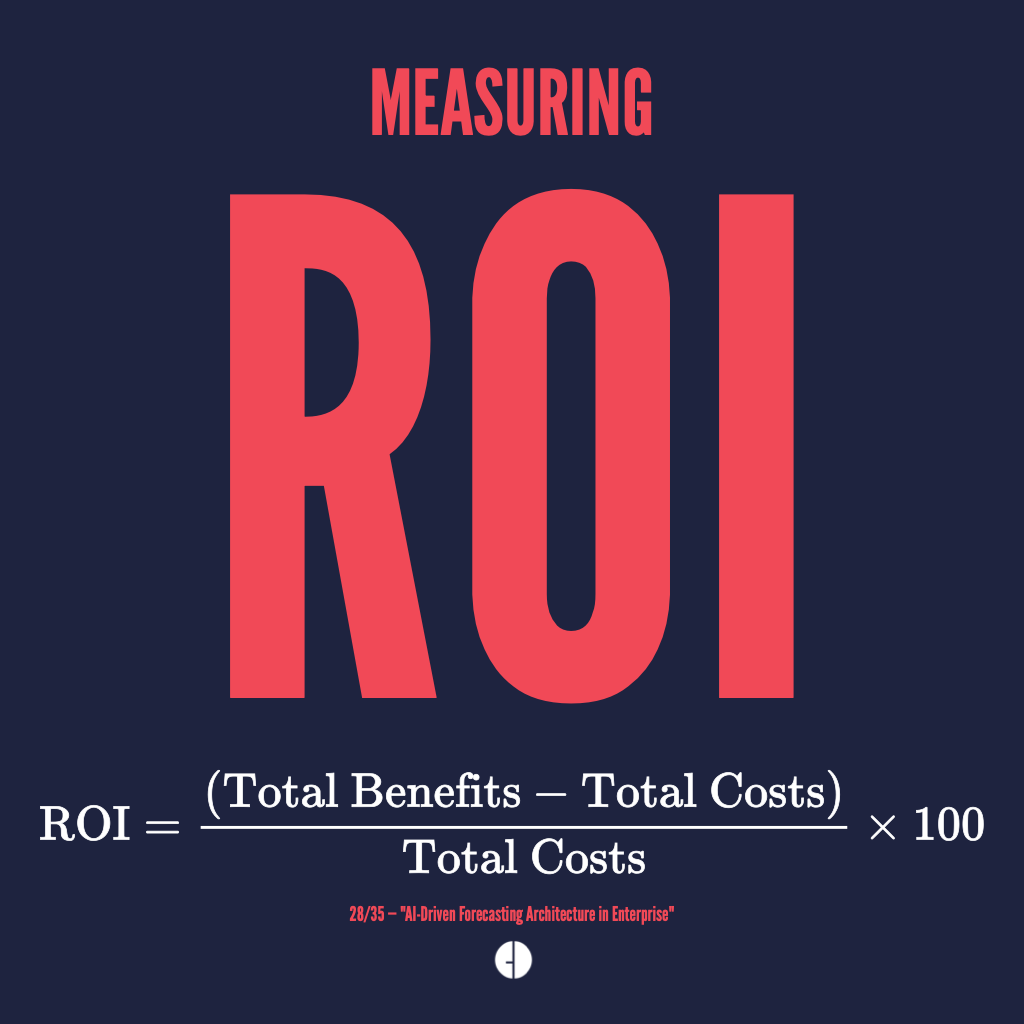
ROI can be defined as the ratio of an investment’s net gain to its cost. A simple formula for this is:
The benefits of AI can be categorized as “hard ROI,” which includes quantifiable financial returns such as increased revenue or reduced expenses, and “soft ROI,” which includes broader, often intangible benefits such as brand enhancement, improved employee morale, and workforce skill development.
A practical methodology for estimating the potential value of a specific use case involves a simple formula:
This versatile formula provides a powerful tool for executives to prioritize AI initiatives by providing a well-reasoned estimate of a project’s potential impact. For instance, a chatbot handling 10,000 inquiries that previously required human time can be translated into a quantifiable money value by calculating labor hours saved.
The reported ROI figures are not solely a result of the technology itself but are highly dependent on the quality of data, strategic alignment, and the organizational maturity of the implementing enterprise. The evidence suggests that the most successful AI projects are those with clear business goals, executive sponsorship, and a strong culture of collaboration between technical and business teams.
Industry-Specific Case Studies
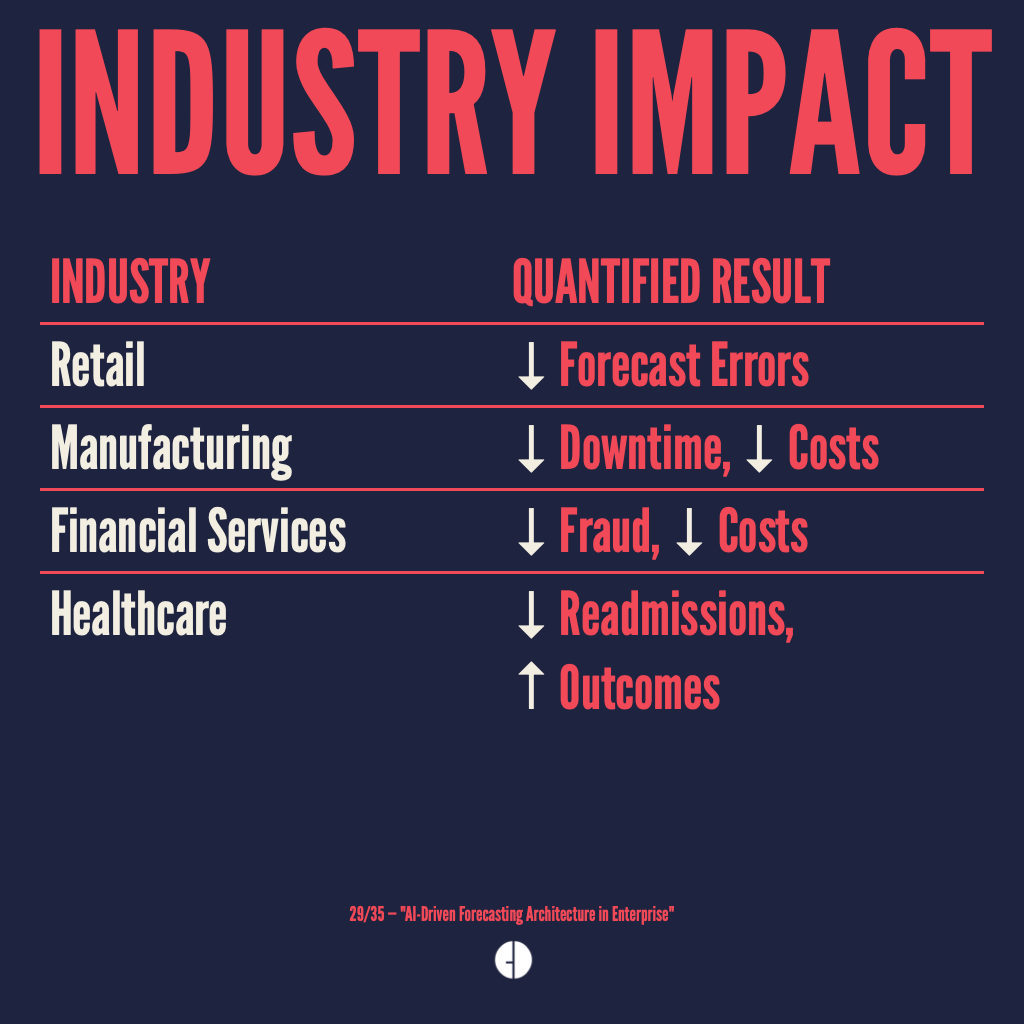
Retail and E-commerce: AI forecasting has a direct impact on the bottom line. It has the potential to reduce forecast errors, which can lead to a significant decrease in excess inventory and a reduction in stockouts. Beyond the supply chain, AI enables hyper-personalization, which can lead to a drop in cart abandonment and an increase in average order value. Retailers can use demand sensing to respond instantly to sales spikes caused by promotions or new trends, effectively preventing stockouts. These systems are particularly adept at incorporating a multitude of factors, such as weather patterns, local events, and complementary product purchases, to refine predictions and ensure the right product is available at the right time.
Manufacturing and Logistics: Predictive maintenance, a key use case of the architecture, helps prevent equipment failures before they occur, reducing costly downtime and improving operational efficiency. The implementation of AI in these sectors can lead to a decrease in inventory holding costs and a boost in overall operational efficiency. In logistics, AI-powered route optimization platforms can reduce operational complexity and improve service reliability by dynamically rerouting shipments based on real-time traffic, weather, and logistical constraints.
Financial Services: AI enhances decision-making in a high-stakes environment by bolstering fraud detection and risk management. The automation of routine tasks, such as document processing and data entry, can be completed with greater speed and fewer errors, leading to a significant reduction in operational costs. In some cases, organizations can achieve substantial savings through the use of predictive fraud analytics. AI can also be used to scan transaction histories and usage patterns to provide more personalized financial advice and product solutions.
Healthcare: Predictive analytics improves patient outcomes by identifying individuals at a high risk of readmission or treatment complications. This capability also reduces operational costs by optimizing staffing schedules and streamlining inventory. Cognitive analytics, in particular, can process vast medical literature and patient records to recommend personalized treatment plans or help in diagnostics.
Cross-Industry Labor & Productivity: The architecture’s ability to automate repetitive, mundane tasks allows employees to focus on more complex, creative, and ultimately valuable work. AI assistants can help users complete tasks more quickly. Automation of analytics can save significant hours, accelerating decision-making and reducing errors.
Table: Quantified Business Value by Industry
| Industry | Use Case | Key Metric | Quantified Result |
|---|---|---|---|
| Retail | Inventory Forecasting & Management | Forecast error reduction | Significant reduction |
| Retail | Customer Experience | Cart abandonment rate | Potential for improvement |
| Manufacturing | Operational Efficiency | Operational efficiency boost | Significant boost |
| Manufacturing | Inventory Management | Inventory holding costs | Potential for decrease |
| Financial Services | Fraud Detection & Risk Management | Financial savings | Substantial savings |
| Financial Services | Operational Efficiency | Operational cost reduction | Significant reduction |
| Healthcare | Patient Outcomes & Efficiency | Hospital readmission rates | Potential for reduction |
| Cross-Industry | Employee Productivity | Labor hours saved | Significant labor hours saved |
Part 6: The Future of AI-Driven Forecasting
AI Maturity and Competitive Advantage
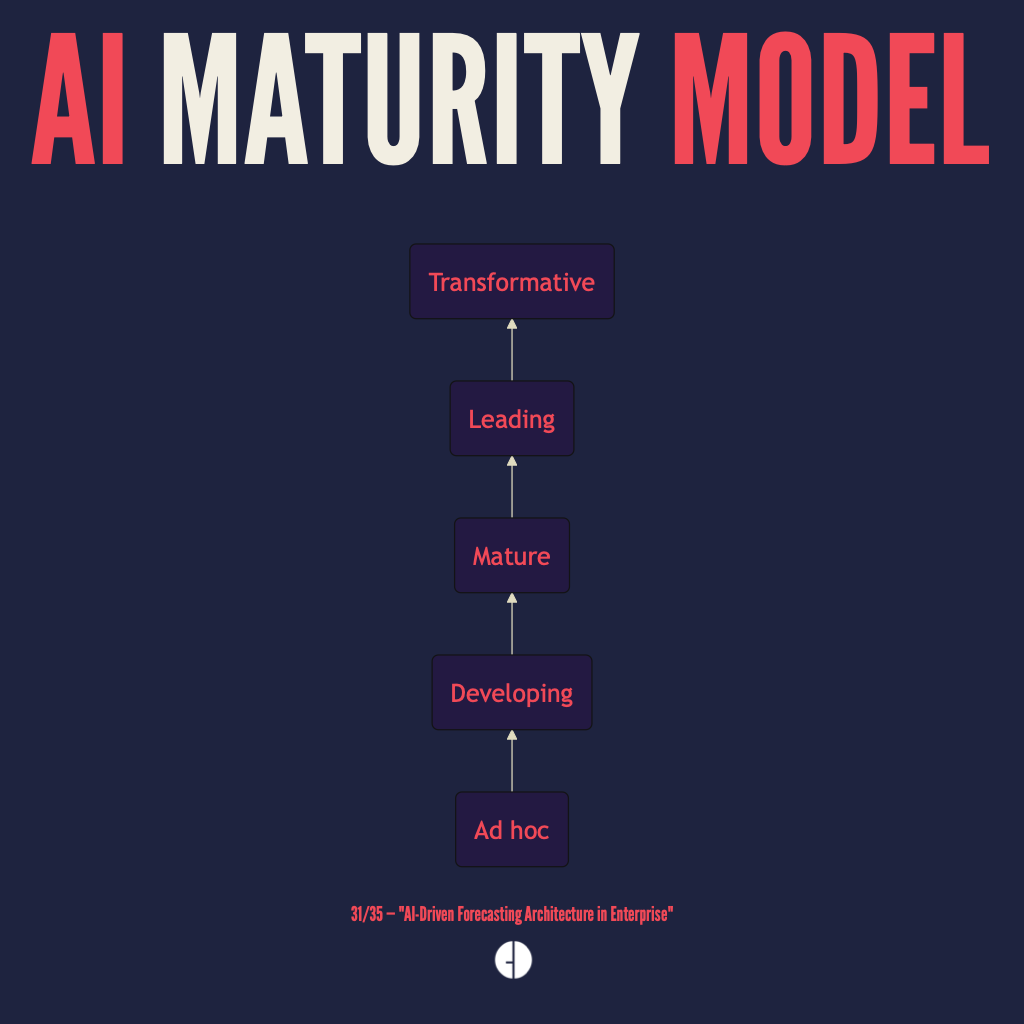
The implementation of an AI-driven forecasting architecture is a journey of organizational maturation. The AI Maturity Model provides a strategic framework for an enterprise to assess its current capabilities and plan for future growth. It outlines five distinct stages that measure how effectively a business adopts and uses AI to achieve its strategic goals:
- Ad hoc/Foundational: At this stage, AI usage is occasional, with no formal plan for integration.
- Developing/Approaching: The business is ready to formalize a plan and is using AI for simple automations and internal projects.
- Mature: The organization has a formal AI strategy and is rolling it out across numerous projects, confidently using it for both internal and external-facing tasks.
- Leading: AI adoption has become company-wide, providing a tangible competitive advantage through customized models and innovation.
- Transformative: The final stage, where AI is deeply embedded and fundamentally reshapes the company’s products, services, or processes.
The framework outlined in this McKinsey report directly maps to this maturity model. A business in the “Developing” stage might focus on a predictive analytics pilot, while a “Leading” enterprise would be building out a full-scale architecture to drive insights across all business units.
Table: Enterprise AI Maturity Assessment
| Maturity Stage | Key Characteristics | Associated Risk/Reward |
|---|---|---|
| Ad hoc | Occasional usage; no formal plan or documentation. | Low investment risk; low strategic reward. Siloed efforts often fail to scale. |
| Developing | Simple automations; focus on internal projects and initial POCs. | Risk is contained to specific projects; initial wins build support for further investment. |
| Mature | Formal strategy is rolled out across numerous projects and departments. | Requires significant investment in infrastructure and talent; delivers measurable efficiency gains and ROI. |
| Leading | AI adoption is company-wide, providing a competitive advantage through innovation. | High investment in talent and governance pays off with high returns and market differentiation. |
| Transformative | AI is deeply embedded and redefines core business processes and models. | Reaps maximum value from AI; requires an agile and adaptable organizational culture. |
Emerging Technologies and Trends
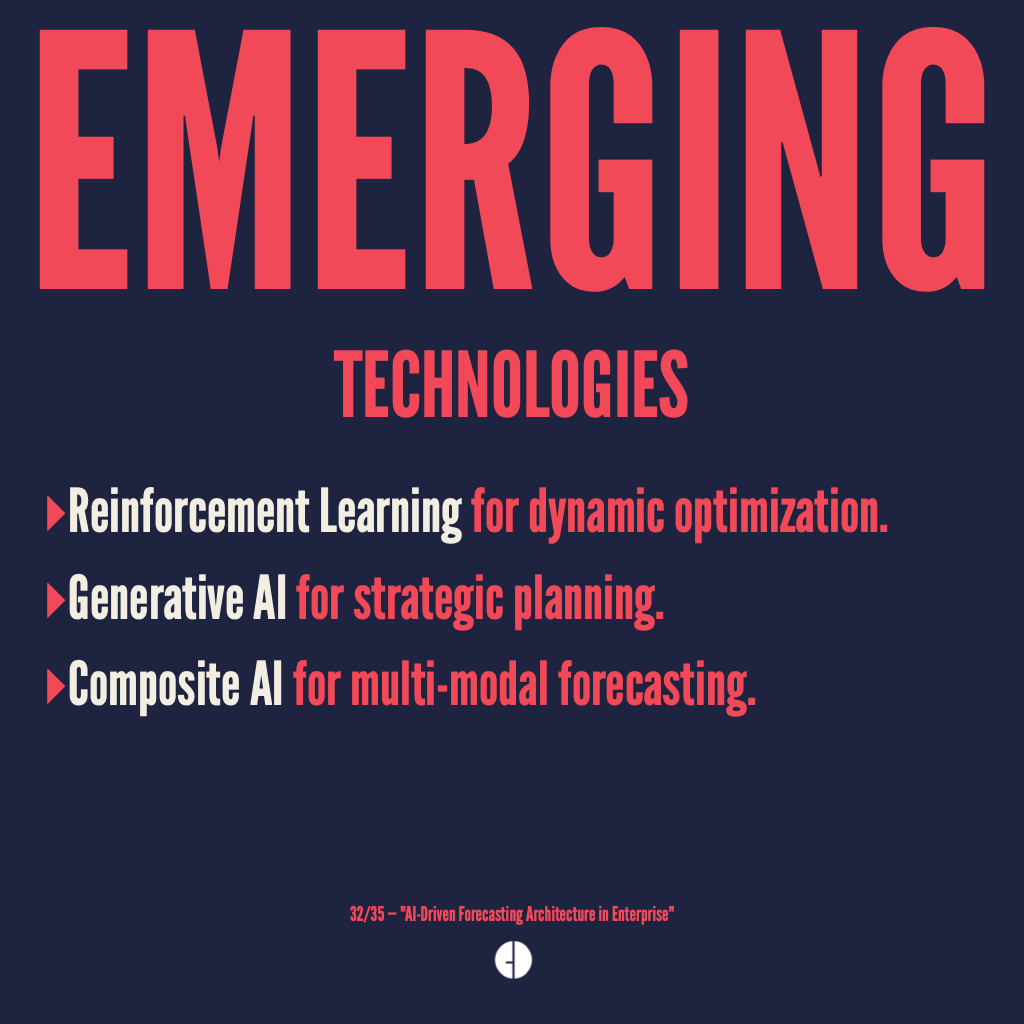
The AI-driven forecasting architecture is not a static blueprint but an evolving one that must incorporate emerging technologies to maintain its competitive edge.
- Reinforcement Learning (RL): Beyond traditional forecasting, RL offers a promising path for optimizing complex, dynamic systems like inventory management and supply chain logistics. Unlike models that rely on historical data, RL agents continuously interact with their environment (e.g., stock levels, lead times) and adapt their strategies based on real-time feedback. This capability is ideal for solving complex supply chain challenges that traditional forecasting methods struggle to address.
- Generative AI for Strategic Planning: Generative AI is moving beyond content creation to become a powerful tool for strategic decision-making. It can process vast amounts of data to simulate various business scenarios, identify emerging opportunities, and help generate dynamic strategic plans that can adapt to changing market conditions. By augmenting human judgment with its ability to process complex information and mitigate human biases, generative AI strengthens and accelerates the entire strategy development process.
- Composite AI: A key trend is the integration of multiple AI technologies into a single, robust system. Rather than relying on a single model, future forecasting architectures will leverage composite AI to combine, for example, the predictive power of machine learning with the contextual understanding of natural language processing and the visual insights of computer vision. This multi-modal approach will enable more sophisticated and nuanced forecasting, unlocking new insights and value.
Executive Summary
The modern enterprise operates within a landscape of unprecedented complexity, characterized by dynamic markets, evolving customer behaviors, and massive data proliferation. In this environment, traditional business intelligence methods, which focus on historical analysis, are no longer sufficient to maintain a competitive edge. This article outlines a definitive strategic blueprint for an AI-driven forecasting architecture, designed to transform enterprise operations from a reactive, hindsight-based posture to a proactive, foresight-driven one. The architecture is not merely a collection of isolated tools but a unified, end-to-end one that seamlessly integrates predictive, prescriptive, and cognitive analytics into the core enterprise structure.
The architecture’s strategic imperative is to harness data as a strategic asset. By moving along a continuum of analytical sophistication, from understanding “what happened” to anticipating “what will happen” and ultimately reasoning about “what should be done,” organizations can achieve unprecedented levels of operational efficiency and strategic agility. The architectural paradigm for this transformation is this architecture, which provides a single source of truth for all enterprise data, eliminating the silos that have long hindered data-driven innovation.
This article aims to demonstrate that the success of the AI-driven transformation hinges on more than technology alone. It establishes that robust data quality, a dynamic governance framework, and a strategic focus on people and processes are non-negotiable prerequisites. This document serves as a guide for senior leadership, chief enterprise architects, and technology strategists seeking to build a resilient, intelligent, and future-proof enterprise.

Thank you!

🎧 Listen to the Podcast
🎬 Watch the Video on YouTube
🖥️ Enjoy the Slide Deck