


Learn how to lead engineering teams struggling with the Dunning-Kruger effect and Impostor Syndrome. This guide helps managers turn team friction into growth.
This article is about:
Ever led a team where half the people think they know everything and the other half secretly believe they know nothing? Welcome to the tension between overconfidence and self-doubt – the quiet forces that shape every engineering team. This article explores how the Dunning-Kruger effect and Impostor Syndrome play out in our day-to-day work – and how great leaders can turn that friction into focus, trust, and growth.
Key Takeaways
- The Dunning-Kruger effect (overestimating competence) and Impostor Syndrome (underestimating competence) are opposite but connected forms of miscalibrated self-perception.
- The combination of overconfident novices and self-doubting experts can create toxic team dynamics that stifle growth and lead to poor outcomes.
- Lasting solutions require building a resilient organizational culture based on psychological safety, structured feedback, and clear career paths.
- Engineering managers must act as “Chief Calibrators,” fostering an environment of intellectual humility to align team members’ self-perception with their actual abilities.
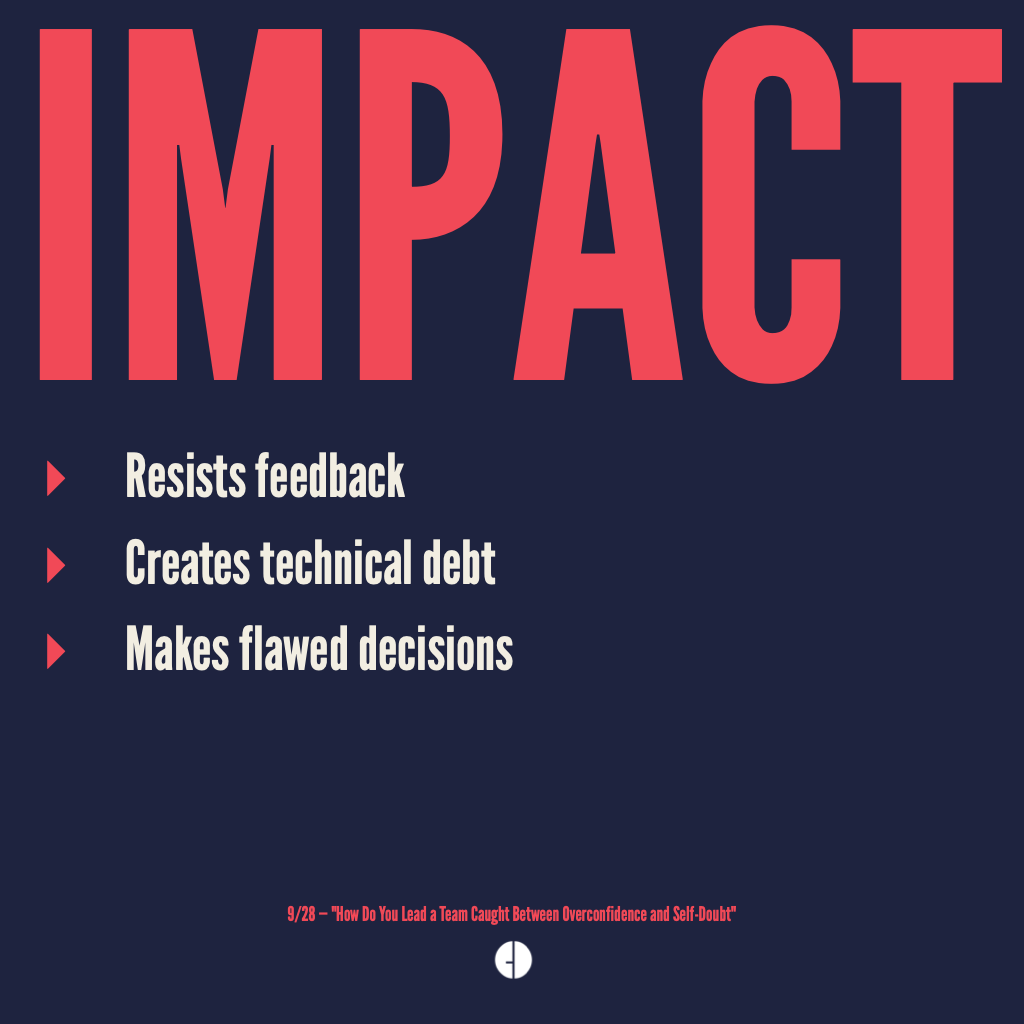
The Dunning-Kruger effect, a cognitive bias of illusory superiority, leads less competent individuals to overestimate their abilities, resulting in poor decision-making and resistance to feedback. Conversely, Impostor Syndrome causes high-achieving individuals to doubt their accomplishments and live with a persistent fear of being exposed as a fraud, stifling their contributions and leading to burnout. This analysis posits that these phenomena are two sides of the same coin of miscalibrated self-perception, endemic to a field characterized by perpetual learning and abstract measures of success.
ℹ️ Note
The interplay between overconfident novices and self-doubting experts creates toxic team dynamics that can undermine project outcomes and erode morale.
Ultimately, effective mitigation strategies do not lie in “fixing” individuals but in engineering a resilient organizational culture. Through the deliberate cultivation of psychological safety, the implementation of structured feedback mechanisms, the establishment of clear career pathways for objective validation, and the fostering of intellectual humility, engineering managers can create an environment that calibrates self-perception, mitigates the negative impacts of these biases, and transforms potential points of failure into opportunities for collective growth.
1. The Dunning-Kruger Effect: The Architecture of Overconfidence
Psychological Foundations of Illusory Superiority
The Dunning-Kruger effect is a cognitive bias wherein individuals with low ability in a specific domain systematically and predictably overestimate their competence in that area. First identified by psychologists David Dunning and Justin Kruger in 1999, this phenomenon is not a reflection of low general intelligence but is specific to a particular skill or area of knowledge. This distinction is critical in the context of software engineering, a field composed of numerous, highly specialized domains where an expert in one area can be a novice in another.
The primary psychological underpinning of the effect is a metacognitive deficit. Dunning and Kruger’s original explanation posits a “dual-burden” on low performers: they are burdened first by their lack of skill, and second, by the fact that this same lack of skill deprives them of the metacognitive ability to recognize their own incompetence. They are unable to accurately evaluate the quality of their own performance or recognize the superior performance of others, leading them to an inflated and erroneous self-assessment. This metacognitive blindness is the core reason why individuals experiencing the effect are often highly resistant to constructive feedback; they genuinely lack the framework to understand their own shortcomings.
The Dunning-Kruger effect also describes an inverse phenomenon observed in high performers. Experts in a given domain have a tendency to underestimate their own relative ability. This miscalibration stems not from a lack of confidence in their absolute performance, but from an inaccurate assessment of others’ abilities. This is often explained by the false-consensus effect, a tendency to assume that tasks that are easy for oneself are also easy for others. An expert, for whom a complex task has become intuitive, projects this ease onto their peers, leading them to believe their own skills are less remarkable than they actually are.
Manifestation in the Software Engineer’s Journey
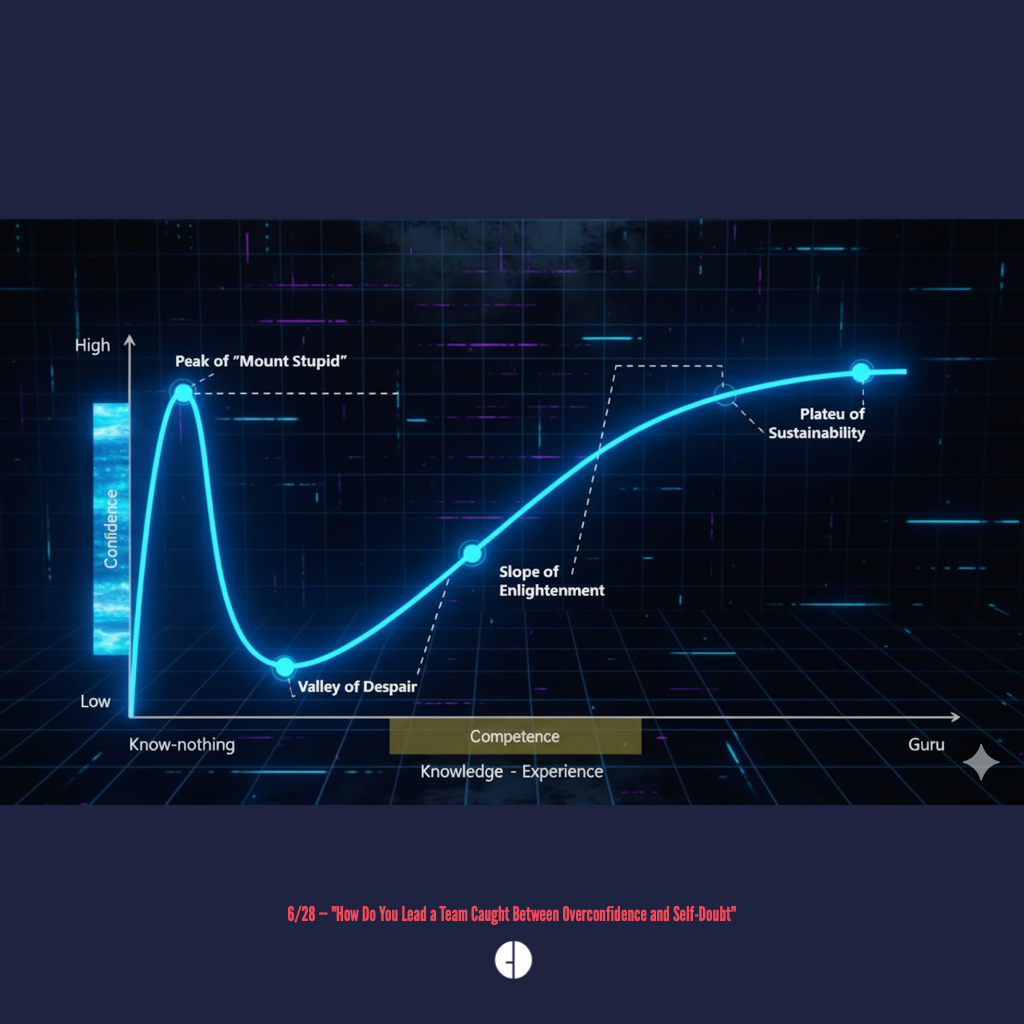
The Dunning-Kruger effect maps closely onto the typical learning and confidence trajectory of a software engineer, often visualized as a curve with distinct stages.
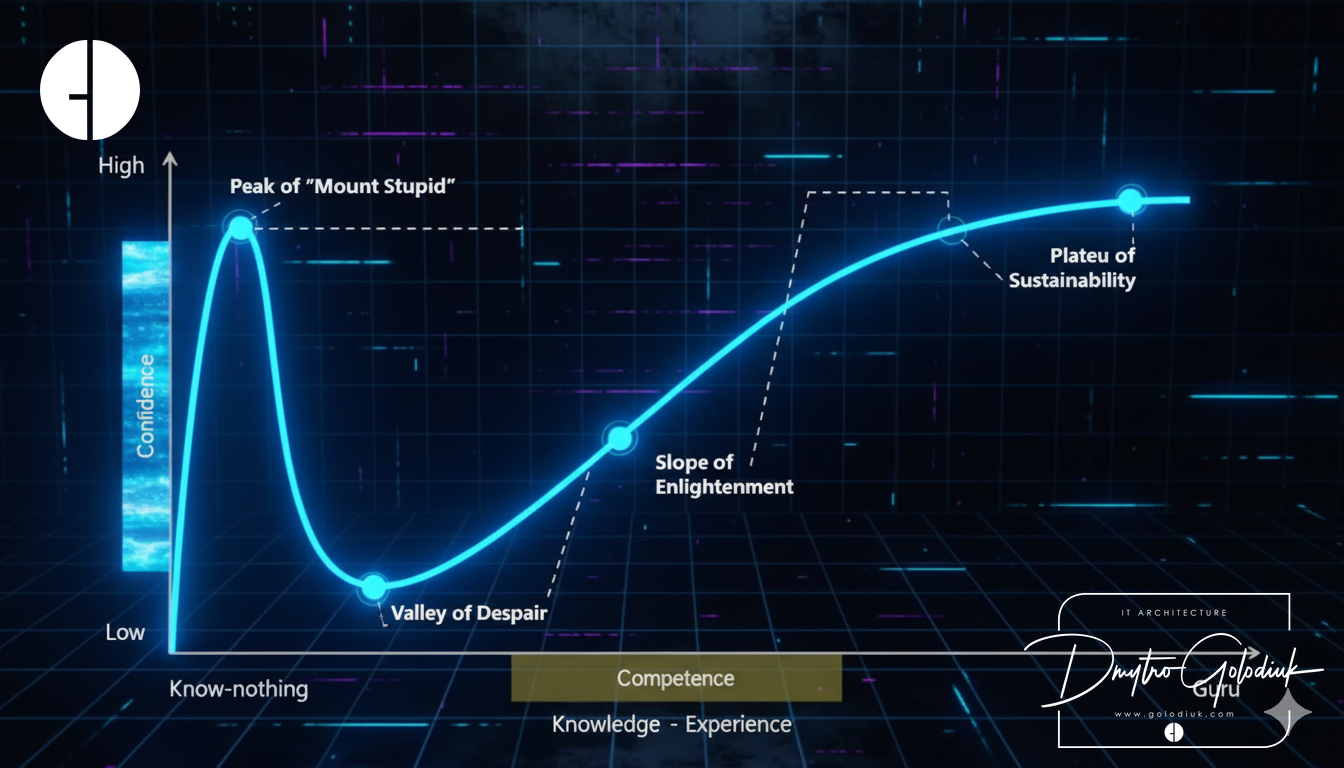
The “Peak of Mt. Stupid”: This initial stage characterizes the novice developer. After learning the fundamentals of a programming language or framework – enough to build a simple application or solve a few problems from Stack Overflow – they experience a significant surge in confidence. At this point, the developer is “unconsciously incompetent”; they possess just enough knowledge to be functional but not enough to recognize the vast complexity of the domain they have entered. They are confident they can solve any problem quickly, often because they are unaware of concepts like scalability, maintainability, or security.
The “Valley of Despair”: The sharp descent from “Mt. Stupid” is typically triggered by an encounter with real-world complexity. This may come in the form of a challenging project, an in-depth code review from a senior developer, or simply continued learning that reveals the true scope of the field. The developer has a humbling realization of how much they do not know, leading to a crash in confidence. This phase of “conscious incompetence” is a critical juncture where the developer becomes aware of their knowledge gaps. While it can be a period of significant self-doubt and is a common point where Impostor Syndrome can emerge, it is also the prerequisite for genuine, deep learning.
The “Slope of Enlightenment” and “Plateau of Sustainability”: By persevering through the “Valley of Despair,” the developer begins to rebuild their confidence. This time, however, it is grounded in accumulating experience and actual competence. As they move from “conscious incompetence” to “conscious competence,” they can perform complex tasks but must do so with deliberate effort. Eventually, they may reach the “Plateau of Sustainability,” a state of “unconscious competence” where their skills are second nature. Truly senior engineers often reside on this slope and plateau, possessing a measured confidence that is acutely aware of the boundaries of their own expertise and the vastness of what they still have to learn.
Organizational Triggers and Amplifiers
While the Dunning-Kruger effect is an individual cognitive bias, its prevalence and impact can be significantly amplified by the organizational environment.
Lack of Mentorship and Feedback: In engineering cultures that lack robust mentorship programs or rigorous, constructive code review processes, a junior developer’s overconfidence can persist unchecked. If their submitted code “works” on a superficial level, they receive no corrective signal that their solution is inefficient, difficult to maintain, or insecure. This absence of quality checks and expert guidance stunts their growth by reinforcing their inflated self-assessment and allowing them to remain on “Mt. Stupid” for a prolonged period.
Organizational Stagnation: The effect is not limited to junior engineers. Experienced developers who have spent many years working on a single product or within a stable, unchanging technology stack can also be susceptible. Their deep but narrow expertise can create significant blind spots, leading them to overestimate their ability to tackle new challenges that require different architectural patterns or paradigms. Their long tenure is mistaken for broad expertise, a subtle but dangerous manifestation of the Dunning-Kruger effect in senior ranks.
⚠️ Warning
The presence of the Dunning-Kruger effect is a direct impediment to a team’s ability to foster a learning culture. The metacognitive inability to recognize one’s own incompetence naturally leads to a resistance to the very mechanisms designed to promote growth.
An individual who genuinely believes their work is high-quality will dismiss feedback as misguided or irrelevant. They are also less likely to seek out learning opportunities from experts, as they do not perceive a significant knowledge gap to begin with. This creates a damaging feedback loop where the individuals most in need of guidance are the least receptive to it, actively undermining the organizational goals of continuous improvement and knowledge sharing.
2. Impostor Syndrome: The Paradox of Proven Competence
Psychological Foundations of Perceived Fraudulence
Impostor Syndrome, or Impostor Phenomenon, is not a clinical mental disorder but an internal psychological experience characterized by intense feelings of intellectual and professional fraudulence. It predominantly affects high-achieving individuals who are unable to internalize their accomplishments and skills, despite objective, external evidence of their competence. Those experiencing it live with a persistent fear of being “exposed” as a fraud, attributing their success to external factors such as luck, timing, or deceiving others, rather than to their own ability.
This experience often manifests in a self-perpetuating “Impostor Cycle”. When faced with an achievement-related task, the individual experiences intense anxiety and self-doubt. This leads to one of two responses: extreme over-preparation (working much harder than necessary) or procrastination followed by a frantic, focused effort to complete the task at the last minute. Upon successful completion, there is a brief period of relief, but the success is not internalized. If they over-prepared, they attribute the success to brute-force effort, not ability (“I only succeeded because I worked 80 hours”). If they procrastinated, they attribute it to luck (“I got lucky this time”). This failure to connect success with competence reinforces the core belief of being a fraud and primes the individual for the cycle to repeat with the next task.
Impostor Syndrome is strongly correlated with personality traits such as perfectionism, neuroticism, and low self-esteem. The relentless drive to over-prepare and achieve unattainable standards of perfection to avoid being “exposed” is a direct pathway to chronic stress, anxiety, job dissatisfaction, and ultimately, burnout.
The Software Engineering Crucible
The field of software engineering is a particularly fertile ground for Impostor Syndrome due to a unique combination of environmental and professional pressures.
- Constant Technological Flux: The software development landscape is in a state of perpetual evolution, with new languages, frameworks, and best practices emerging daily. This creates a situation where there is always something a developer does not know, fostering a constant sense of being behind or inadequate. The aphorism “the more you learn, the less you know” captures this experience perfectly; as an engineer’s knowledge grows, so does their awareness of the vastness of the unknown, which can directly fuel feelings of impostorism.
- Measurable and Competitive Work: Unlike in some fields where contributions are subjective, software engineering often involves quantifiable metrics (e.g., performance benchmarks, lines of code, bug resolution times) and takes place in a global talent pool. This environment of high competition and measurable output makes it easy for developers to engage in constant, often unhealthy, comparisons with their peers, which can exacerbate feelings of inadequacy.
- The “Monolith” of Learning: The way skills are often discussed in the industry – e.g., “you need to learn Python” or “we’re moving to React” – can make new skill sets seem like monolithic, intimidating mountains to climb. This framing discourages an incremental approach to learning and can make developers feel overwhelmed and unqualified before they even begin, feeding the narrative that they are not “smart enough” to keep up.
Archetypes of Inadequacy in a Development Team
Impostor Syndrome manifests in several distinct patterns or archetypes, each with specific behaviors that can be observed within a software development team.
- The Expert: This individual feels they must know every detail about a technology stack. They live in fear of being asked a question they cannot answer, as they believe this will expose them as a fraud. In a team meeting, they may remain silent rather than risk asking a “stupid” question that reveals a gap in their knowledge.
- The Soloist: The Soloist believes that asking for help is a sign of failure. They will struggle with a complex bug or a design problem for days on their own, refusing to collaborate with teammates. They view true competence as the ability to solve every problem independently, and seeking help would invalidate their expertise.
- The Natural Genius: This archetype measures competence by the ease and speed with which they can grasp new concepts or solve problems. They believe they should “get it” right on the first try. When they struggle to learn a new framework or debug a complex algorithm, they experience intense feelings of shame and self-doubt.
- The Superhero/Perfectionist: These individuals feel they must work harder than everyone else and deliver flawless code every single time. They may stay late perfecting minor details of a pull request or take on an unsustainable workload to prove their worth. Any bug that makes it to production is seen not as a process failure but as a deep personal failing, providing further “evidence” of their fraudulence.
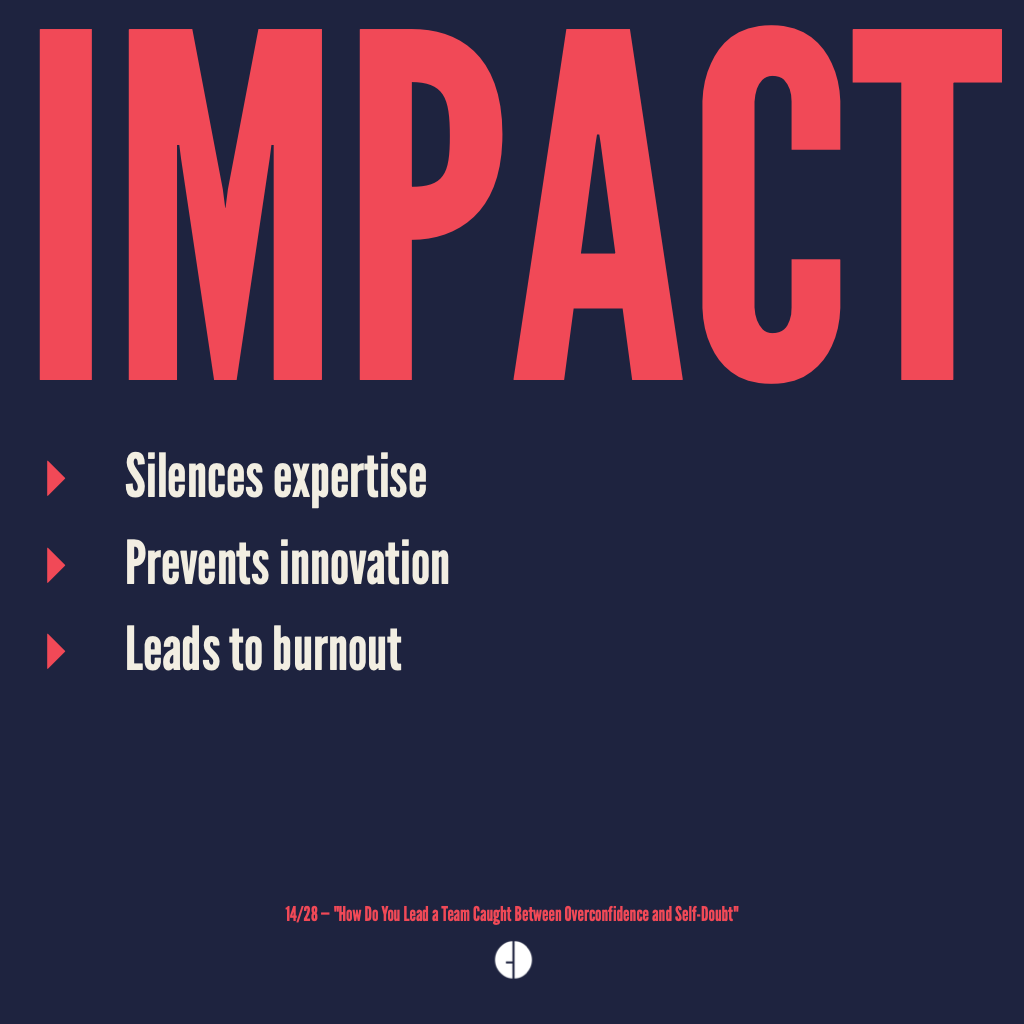
The impact of Impostor Syndrome extends far beyond an individual’s mental health; it acts as a direct tax on a team’s innovation and velocity. The core fear of being exposed as a fraud drives behaviors that are antithetical to a high-performing team. It discourages individuals from speaking up with novel or challenging ideas in design discussions for fear of being wrong. It prevents them from asking clarifying questions that could avert costly mistakes down the line. It makes them hesitant to take on challenging stretch assignments that are crucial for growth, because they fear failure. This risk aversion and withdrawal of expertise create a significant drag on the team’s collective potential, leaving valuable insights unspoken and innovative paths unexplored.
Furthermore, the transition into a senior or management role is a particularly potent trigger for Impostor Syndrome. As an engineer’s responsibilities shift from direct, hands-on coding to technical leadership, mentorship, or people management, the metrics for success become far more ambiguous. The feedback loop for an individual contributor is often short and clear: code passes tests, features are shipped, and performance improves. For a manager, the feedback loop is long and subjective: the positive impact of a mentorship decision may not be apparent for months or even years. This loss of a familiar and concrete validation mechanism, combined with the new and immense responsibility for the careers of others, creates a perfect storm of uncertainty. The newly promoted manager often feels like a novice again, but is now burdened with the title and expectations of an expert – a classic recipe for the onset of severe Impostor Syndrome.
3. A Comparative Framework: Overconfidence vs. Self-Doubt
A Spectrum of Self-Perception
The Dunning-Kruger effect and Impostor Syndrome can be understood as two ends of a spectrum of miscalibrated self-perception, where an individual’s subjective assessment of their ability diverges from their objective competence.
- Dunning-Kruger Effect: This represents a positive delta, where an individual’s perceived competence is significantly greater than their actual competence. The root cause is often a metacognitive deficit or a fundamental lack of self-awareness, preventing them from seeing their own limitations.
- Impostor Syndrome: This represents a negative delta, where an individual’s perceived competence is significantly lower than their actual competence. This is often rooted in an excess of self-awareness, hyper-criticism, or an inability to internalize proven success.
While they appear to be polar opposites, both phenomena deal with a distorted self-assessment and can lead to negative professional outcomes.
Toxic Interplay Within an Engineering Team

The true organizational danger of these biases lies not just in their individual effects, but in their destructive interplay when both are present within the same team. The combination of overconfidence and self-doubt can create a dysfunctional dynamic that stifles growth, silences expertise, and leads to poor technical outcomes.
A classic and damaging scenario involves a junior engineer experiencing the Dunning-Kruger effect and a senior engineer suffering from Impostor Syndrome. The junior developer, perched on “Mt. Stupid,” may propose a simplistic solution with absolute confidence, unaware of its long-term flaws. The senior engineer, despite possessing the experience to see the problems, may be hesitant to challenge the idea forcefully due to their own self-doubt. The junior’s brash confidence can be misinterpreted by the senior as true competence, reinforcing the senior’s internal narrative that they are “out of touch” or “no longer sharp”. This can cause the senior engineer to withdraw from technical debates, effectively robbing the team of its most valuable source of wisdom and experience.
❗ Caution
This dynamic of dominance and withdrawal is common. Individuals affected by the Dunning-Kruger effect tend to dominate conversations, assert their opinions forcefully, and resist feedback, believing their perspective is the most informed. In contrast, those with Impostor Syndrome are more likely to remain silent, undervalue their own contributions, and defer to more assertive voices, even when they suspect a decision is flawed.
This creates an environment where decisions are not made based on the best available information or expertise, but on the confidence level of the speaker. The loudest, least-competent voices can easily drown out the quietest, most-competent ones, leading to suboptimal architectural choices, inaccurate planning, and a decline in overall team performance.
Comparative Diagnostic for Engineering Managers
For an engineering manager, correctly identifying the underlying cause of an engineer’s behavior is the first step toward effective intervention. Applying the wrong strategy – such as offering effusive praise to an individual with Dunning-Kruger or delivering harsh criticism to someone with Impostor Syndrome – can be counterproductive. The following table provides a diagnostic framework to help managers differentiate between these two phenomena based on observable behaviors in a software engineering context.
| Characteristic | Dunning-Kruger Effect | Impostor Syndrome |
|---|---|---|
| Core Belief | “I know more than I do. This is easy.” | “I know less than others think. I got lucky.” |
| Relationship to Competence | Overestimation of low ability. | Underestimation of high ability. |
| Typical Manifestation | Junior developers on “Mt. Stupid”; senior engineers in stagnant roles. | High-achieving mid-level, senior, and newly promoted managers. |
| Behavior in Code Review | Dismissive of feedback; argues against suggestions; believes their code is “bulletproof”. | Overly apologetic for minor issues; anxious about criticism; may over-engineer to “prove” worth. |
| Approach to New Tech | Jumps in with high confidence; grossly underestimates complexity and learning curve. | Hesitates to start; feels overwhelmed by the amount to learn; fears not mastering it quickly enough. |
| Response to Failure/Bugs | Externalizes blame (“The requirements were bad,” “The API is buggy”); denies the severity of the issue. | Internalizes blame excessively; sees any bug as personal failure and proof of fraudulence. |
| Primary Risk to Team | Introduction of poor quality code and technical debt; flawed architectural decisions; unrealistic project estimates; strained team dynamics. | Engineer burnout; loss of valuable expertise due to silence; stifled innovation and risk aversion; team velocity drag. |
4. Impact on the Software Development Lifecycle (SDLC)
The miscalibrations of the Dunning-Kruger effect and Impostor Syndrome are not abstract psychological states; they manifest as concrete, disruptive forces at every stage of the software development lifecycle. These biases introduce distinct types of project risk that, if unmanaged, can lead to technical debt, project failure, and team dysfunction.
Code Reviews and Technical Feedback
Code review is a critical feedback mechanism in the SDLC, and it is a primary battleground where these biases are either confronted or reinforced.
- Dunning-Kruger Impact: An engineer experiencing the Dunning-Kruger effect may submit code they believe to be “bulletproof” but which is, in reality, overly complex, inefficient, or buggy. During the review process, their metacognitive deficit makes them highly resistant to constructive criticism. They may argue against valid suggestions, dismiss feedback as a matter of opinion, or perceive it as a personal attack on their “brilliance”. This behavior can turn code reviews into contentious battles, lead to the team avoiding rigorous reviews altogether, and ultimately allow low-quality code and technical debt to enter the codebase.
- Impostor Syndrome Impact: For an engineer with Impostor Syndrome, a code review can feel like a trial where their perceived fraudulence will finally be exposed. This fear can lead to procrastination in submitting pull requests as they endlessly polish their work. When they do receive feedback, even minor suggestions can be internalized as confirmation of their incompetence, causing significant anxiety. Furthermore, they may hesitate to provide critical feedback on others’ code, doubting their own judgment and fearing that their comments will be “wrong” or unwelcome.
Architectural and Design Decisions
Strategic technical decisions made early in a project have long-lasting consequences, and both biases can steer these decisions in dangerous directions.
- Dunning-Kruger Impact: Overconfidence is a significant threat during architectural design. An engineer or manager affected by DKE may champion a particular technology or pattern with which they have only superficial familiarity, vastly underestimating its operational complexity or unsuitability for the problem at hand. This is often compounded by other cognitive biases, such as anchoring on their first idea or seeking out information that confirms their preconceived notions (confirmation bias). Their misplaced confidence can mislead the team into adopting a flawed architecture that will be costly to change later.
- Impostor Syndrome Impact: The most damaging impact of Impostor Syndrome in this phase is silence. Senior engineers with years of valuable, hard-won architectural experience may doubt the validity of their own insights and remain quiet during critical design discussions. They may defer to more assertive (but potentially less-experienced) voices, creating a knowledge vacuum where the team’s best ideas are never voiced. This fear of being wrong or challenged leads to risk aversion, promoting conservative, “safe” designs over innovative solutions that could provide a competitive advantage.
Estimation, Planning, and Risk Assessment
The ability to accurately forecast effort and identify potential risks is fundamental to successful project management. Both biases directly corrupt this process.
- Dunning-Kruger Impact: The overconfidence inherent in the Dunning-Kruger effect translates directly into overly optimistic and unrealistic project estimates. An engineer who fails to see the complexity of a task will confidently assert it can be completed in a fraction of the time actually required. When these estimates are used for planning, they result in impossible deadlines, which in turn leads to rushed work, increased team stress, and inevitable project delays when reality sets in.
- Impostor Syndrome Impact: An engineer with Impostor Syndrome approaches estimation from a place of fear. They may be hesitant to commit to any timeline, worried they will not be able to deliver on their promise. This can lead to “sandbagging” – providing grossly inflated estimates to create a large safety buffer – which can cause the organization to misallocate resources or pass on viable projects. Their hyper-awareness of potential pitfalls can be an asset in risk identification, but it can become paralyzing during planning, preventing them from making confident, reasonable commitments.
From a project management perspective, these two phenomena represent distinct and opposing forms of risk. The Dunning-Kruger effect introduces a risk of commission – the team actively commits to a flawed design, an unrealistic timeline, or a poor-quality implementation. The actions taken are positive but misguided. Impostor Syndrome, conversely, introduces a risk of omission – the team fails to act on its best ideas, avoids ambitious but achievable goals, or fails to leverage its most experienced members. The most effective strategies are not pursued. An effective engineering manager must recognize that their role includes managing both of these psychological risks, not just technical or logistical ones. The feedback mechanisms built into the SDLC, such as code reviews, architectural reviews, and retrospectives, are the primary arenas where these biases are either confronted and calibrated or ignored and reinforced. The quality and psychological safety of these processes are therefore paramount.
5. The Manager’s Playbook: Fostering a Culture of Calibrated Confidence
Managing the Dunning-Kruger effect and Impostor Syndrome is not about amateur psychoanalysis but about engineering a resilient team culture. The most effective interventions are not ad-hoc conversations but systemic processes designed to foster psychological safety, provide objective feedback, and create clear pathways for growth. The following strategies form an interconnected system for building a culture of calibrated confidence.
Foundational Strategy: Building Psychological Safety
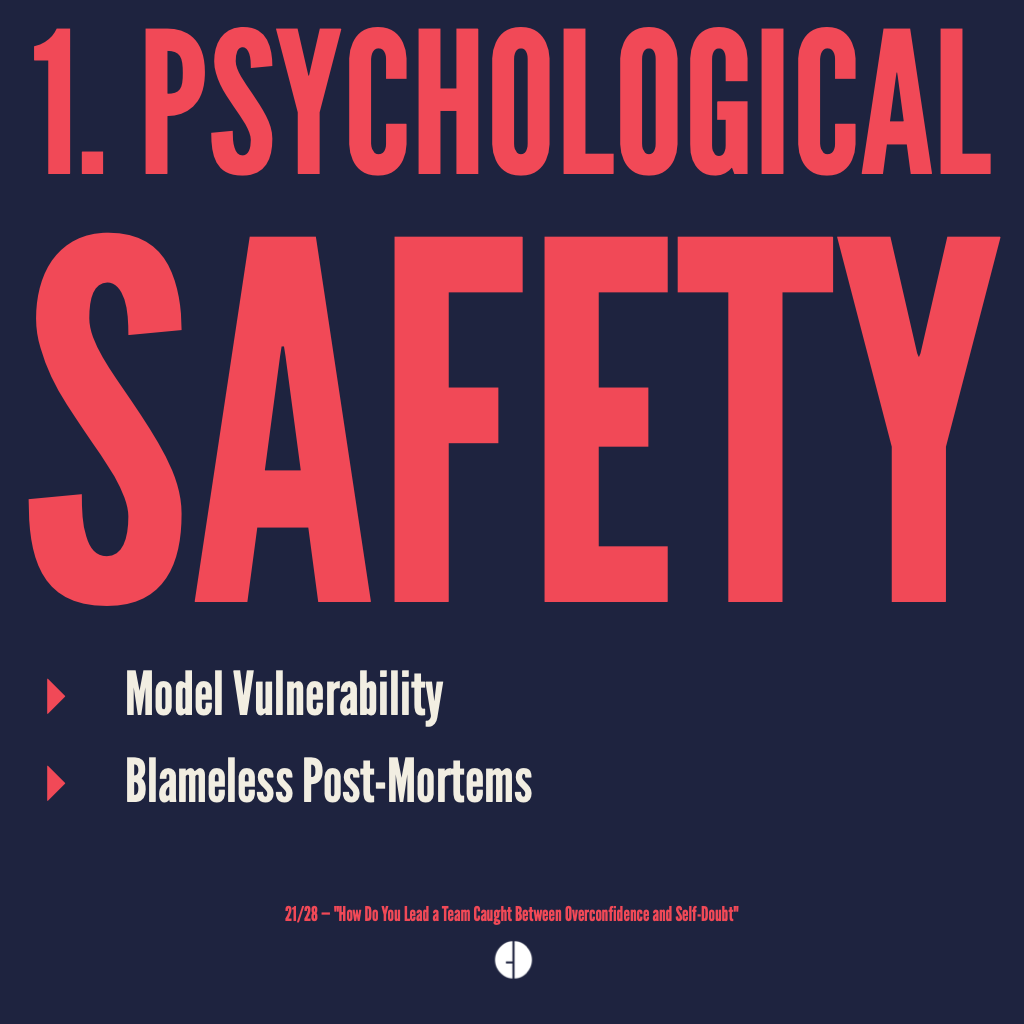
Psychological safety is the bedrock upon which all other interventions rest. It is the shared belief within a team that members can take interpersonal risks – such as admitting a mistake, asking a question, or challenging a prevailing idea – without fear of punishment, humiliation, or retribution. Without this foundation, any attempt to give feedback will be met with defensiveness from the overconfident and fear from the self-doubting.
- The Manager’s Role in Modeling Vulnerability: Psychological safety starts with leadership. An engineering manager who openly admits when they do not know something, acknowledges their own mistakes, and models curiosity by asking questions creates an environment where it is safe for their team members to do the same. This act of leadership directly counters the fear of appearing incompetent that drives Impostor Syndrome and punctures the pretense of infallibility that characterizes the Dunning-Kruger effect.
- Implementing Blameless Post-Mortems: The practice of blameless post-mortems is a powerful, formalized ritual for building psychological safety. Following an incident or failure, the team convenes to analyze the systemic causes, focusing on “what” and “how” the failure occurred, rather than “who” was to blame. This process decouples mistakes from personal identity. For an individual with Impostor Syndrome, it reframes failure as a collective learning opportunity, not as proof of their personal fraudulence. For an individual with the Dunning-Kruger effect, it forces a confrontation with the systemic complexity and contributing factors they likely overlooked, providing a humbling and educational experience.
Tactical Interventions: Structured Communication and Growth
With a foundation of psychological safety in place, managers can deploy more targeted tools to help individuals calibrate their self-perception.
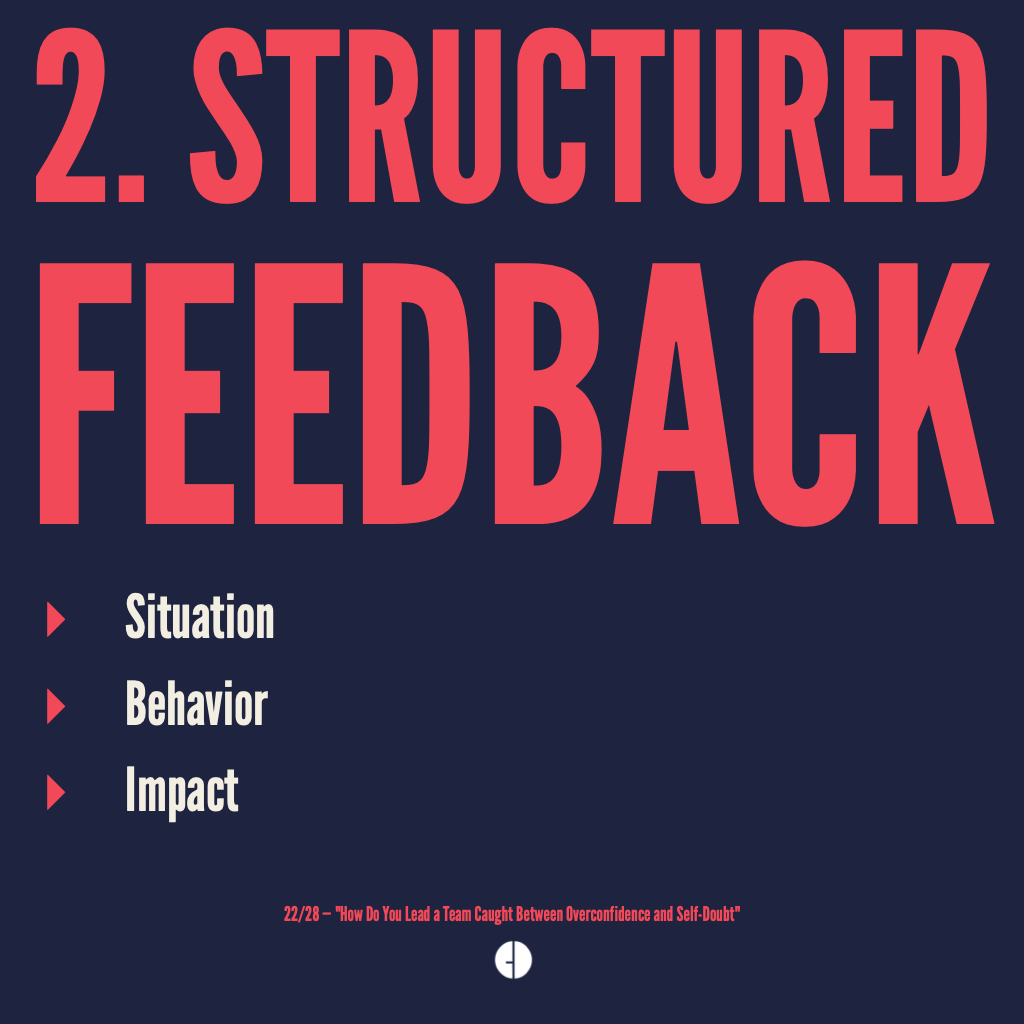
Deploying Objective Feedback Frameworks (SBI): To cut through the subjective distortions of both biases, managers need a framework for delivering objective, evidence-based feedback. The Situation-Behavior-Impact (SBI) model is an effective tool for this purpose. It structures feedback by focusing on concrete, observable facts:
- Situation: “During yesterday’s architecture review…”
- Behavior: “…you stated that the proposed database schema was ‘obviously the only way to do it’ and did not address the scaling concerns raised by the team.”
- Impact: “…which cut off the discussion and left the team feeling that their concerns were not heard.” For an individual with the Dunning-Kruger effect, this factual, non-judgmental framing makes the feedback harder to dismiss as mere opinion. It shifts the focus from “you are arrogant” to “your specific behavior had this negative impact”. For an individual with Impostor Syndrome, the same model can be used to deliver specific, positive reinforcement that is difficult to discount as generic flattery: “In the Q3 planning meeting (Situation), when you presented your analysis of the legacy service dependencies (Behavior), it gave the leadership team the clarity they needed to approve the refactoring project (Impact).”
Structuring Mentorship Programs: Mentorship provides a crucial channel for validation, guidance, and a safe space for engineers to voice insecurities. While beneficial for all levels, a particularly effective strategy for senior engineers experiencing Impostor Syndrome is to task them with mentoring junior engineers. The act of teaching, articulating complex concepts, and sharing their own experiences serves as powerful reinforcement of their own expertise. This “reverse mentorship” provides them with tangible evidence of their competence, directly countering their internal feelings of inadequacy. Effective mentorship programs should have clear goals, defined expectations for both mentor and mentee, and regular check-ins to ensure a productive relationship.
Designing Clear Career Ladders: Well-defined career ladders serve as a powerful form of institutional, external validation. For individuals with Impostor Syndrome who struggle to internalize their success, a clear ladder provides an objective, impartial benchmark for competence. By explicitly defining the skills, behaviors, and impact expected at each level (e.g., Engineer II, Senior Engineer, Staff Engineer), the organization provides a roadmap for growth and makes promotions feel earned based on merit, not “luck”. This transparency demystifies career progression, gives engineers a sense of agency, and provides a framework for managers to have meaningful, goal-oriented development conversations.
6. Advanced Strategy: Cultivating Intellectual Humility
The ultimate goal is to evolve the team culture beyond simply managing biases to one that actively values intellectual humility. This is the practice of recognizing one’s own cognitive limitations and maintaining a genuine openness to the possibility of being wrong.
- Rewarding the Process, Not Just the Outcome: Managers can foster intellectual humility by shifting recognition and rewards. Instead of only celebrating the person who had the “right answer,” they should also praise individuals who ask insightful questions, challenge assumptions constructively, and admit when they have made a mistake and learned from it. This signals that the team values learning and curiosity as much as it values correctness.
- Separating Ideas from Identity: It is crucial to create processes where ideas can be critiqued rigorously without individuals feeling personally attacked. Practices such as “viewpoint exchange” exercises, where team members must argue for a perspective they disagree with, or “ideas giveaway” days, where ideas are detached from their originators and improved upon by the group, can be effective. This helps individuals with the Dunning-Kruger effect learn to detach their ego from their initial flawed solutions and allows those with Impostor Syndrome to contribute ideas without the fear of personal judgment if the idea is rejected.
These strategies are not a checklist of independent items but rather a reinforcing system. Psychological safety is the soil that allows structured feedback to take root. Mentorship provides a dedicated channel for that feedback to be delivered and processed. Career ladders give that feedback a direction and purpose. A manager cannot simply pick one; they must cultivate the entire system. In this context, the manager’s most critical function is to act as the “Chief Calibrator” for the team. They architect and maintain the organizational systems – feedback, recognition, and process – that provide the constant, reliable, and objective signals necessary for every individual on the team to align their internal sense of competence with their objective reality.
Conclusion: Towards a Resilient and Self-Aware Engineering Organization
The Dunning-Kruger effect and Impostor Syndrome represent more than just individual psychological quirks; they are potent cultural forces within software engineering that can dictate the success or failure of teams and projects. While they manifest as opposite miscalibrations of self-perception – one of overconfidence, the other of self-doubt – they are both rooted in the difficulty of accurately assessing competence in a field defined by abstraction, complexity, and relentless change. Their toxic interplay can lead to a dysfunctional environment where the least competent voices are the loudest, and the most experienced experts are silenced by their own anxieties.

This analysis concludes that addressing these phenomena requires a fundamental shift in managerial focus: away from treating individual “symptoms” and toward cultivating a systemic, cultural “immune system.” The role of the engineering manager is not to be a therapist but to be an organizational architect. The goal is not to eradicate these deeply human tendencies but to build a resilient organization that can recognize, absorb, and correct for the biases they introduce.
The key pillars of this resilient culture are psychological safety, which creates the space for vulnerability and honest discourse; structured feedback and mentorship, which provide the objective data needed for accurate self-calibration; and clear career ladders, which offer external validation and a tangible path for growth. By embedding these practices into the daily fabric of the team – through rituals like blameless post-mortems, frameworks like SBI, and a commitment to intellectual humility – a manager can transform the hazardous dynamics of misperception. In such an environment, overconfidence is met not with shame but with gentle, data-driven correction, and self-doubt is met not with dismissal but with specific, evidence-based validation. Ultimately, by treating these psychological challenges as engineering problems to be solved with thoughtful systems and processes, organizations can turn potential points of individual failure into powerful opportunities for collective learning and sustained growth.
🎧 Listen to the Podcast
🖥️ Enjoy the Slide Deck











Thank you!


🌟 Excited to share that I'm now mentoring on @Mentor.sh!
If you're looking to accelerate your career growth, I'd love to help you reach your goals.
💼 Book a session: Dmytro Golodiuk on Mentor.sh